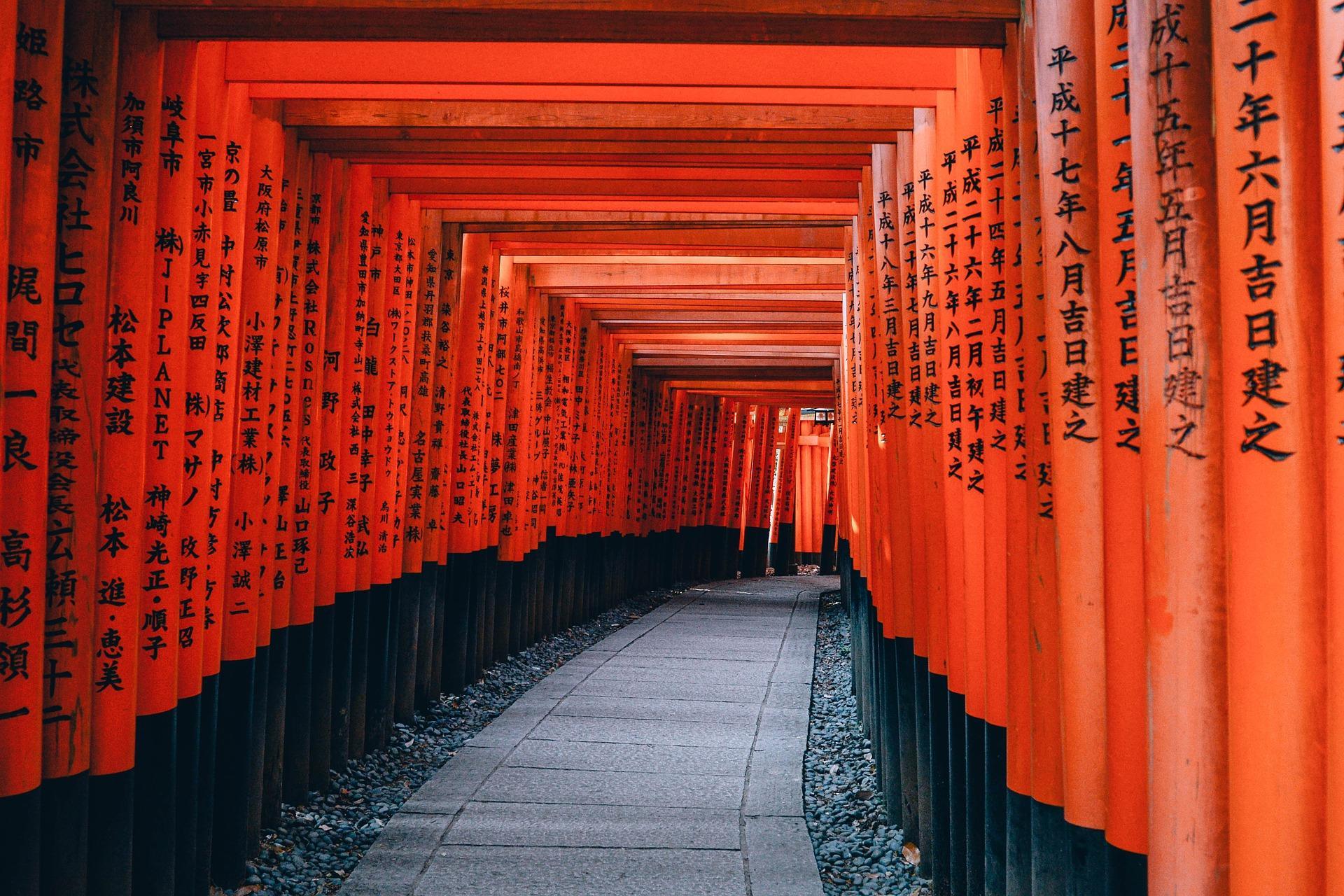
Learning Japanese language will teach you that culture's customs better than most other languages do, from its ingrained manners to its regard for honour.
Few people who set out to learn a new language give any thought to their endeavour being a lifelong undertaking. In fact, as a native speaker of English, you might not even believe that you too are perpetually learning new things about the language you use every day. Seen in that light, anyone learning a language as radically different from English as Japanese is deserves plenty of kudos. Among other facets of this ancient language, you'll learn:
how to write in Japanese using three different sets of ideograms
how Japanese names are given based on the concepts they represent
how simple counting and maths can be using the Japanese numerical system
how to say the right Japanese greeting for each part of the day
how to use the right honorific to show respect
how supposedly authentic Japanese words used in English don't have the same pronunciation in Japanese.
You'll even learn cute Japanese words and cool Japanese phrases! Your Superprof is always here to help you learn how to speak Japanese and support your language learning efforts, even if it's just homework help or giving you a pat on the back. This article counts as help, too, because it lays out some of the basics of Japanese language learning.
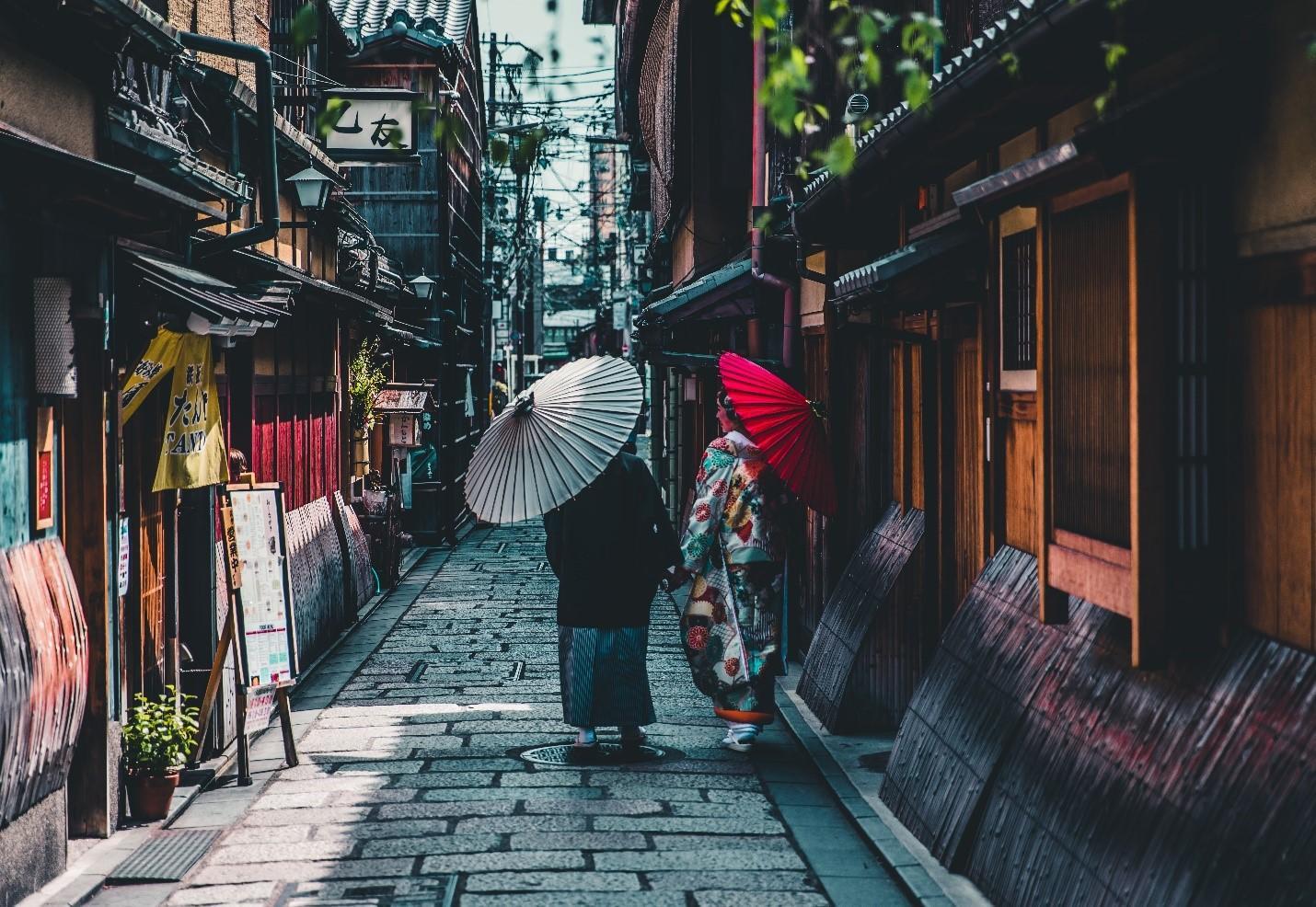
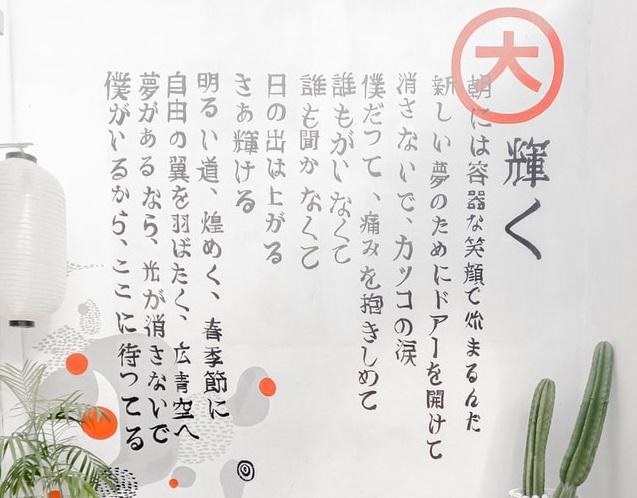
To the uninitiated, Japanese writing cannot be said to have an alphabet because it consists of characters. Or, more specifically, it's hard to connect the concept of an alphabet with so many ideograms, considering that the very word 'alphabet' derives from the Greek 'alpha+beta'. In other words, A and B. In a sense, the Old English word 'stæfræw', meaning 'row of letters' is a better definition of 'alphabet'. And it better represents the concept of Japan's alphabet, even if the rows in question are not letters as we know them. Authentically Japanese words such as kimono and geisha are written in kanji. Photo by Randy Fath on Unsplash Japan's alphabet consists of three separate writing systems: kanji, hiragana and katakana. Each one has a specific function in Japanese writing:
kanji is used to write names - given names and surnames, as well as places, numbers and to indicate the start of a new (hiragana) word.
hiragana is reserved for authentically Japanese words
katakana represents words imported from other languages, including English
Note that there's no such thing as Japanese letters in English. What you get instead is a syllable, usually a vowel-consonant combination unless the ideogram represents only a vowel, such as the O in osake (お酒). More on sake in a mo. When trying to figure out what my name is in Japanese, I was a bit stumped by those rules. Would my name be considered among those Japanese English words and, thus, should be written in katakana? Or, as it is a given name, should I instead try for kanji? My Japanese teacher set me straight: written in katakana - NOT kanji, my name would be ソフィア. Now, back to our topic. We have to introduce a note of caution. Words we consider authentically Japanese, such as samurai, sake and kimono may be wholly written in kanji - 武士, (bu shi - samurai), 酒 (sake, usually preceded by お - o), and 着物 (kimono), for example. That's because of China's historic influence on ancient Japanese written language. By that explanation, you likely have deduced that kanji consists of Chinese characters. They are easy to recognise even if you don't know any Mandarin because they are fairly regimented; there are no loops, whorls or random strokes. Indeed, they are rather boxy-looking. Fun fact: Mandarin speakers tend to get confused about how to pronounce kanji because it looks exactly like ideograms still used in Chinese. The samurai characters would be pronounced wu shi (warrior), the sake character is pronounced jiu and has the same meaning. Kimonos would be read zhe wu which, when combined, have no meaning in Chinese. However, that character combo is phonetically close to the Chinese word for clothing (yi fu) so maybe a bit of evolution took place for kimonos to be thus-labelled. Back to the Japanese writing systems, now. First, embrace the fact that there is no English Japanese alphabet to make this language more familiar; you'll start right off reading Japanese ideograms - even if your Japanese for Beginners book includes romaji transcriptions. Also, when studying Japanese, you cannot learn first one writing system and then the next. They must be learned all at the same time because they are all integrated. Besides, while you could technically write an entire paragraph using only hiragana, it would be very hard to understand. Japanese syntax - word order and the spacing between words, is vastly different from English syntax. For one, there are no spaces between words. Learn more about how just that would make reading Japanese difficult...
Numbers in Japanese
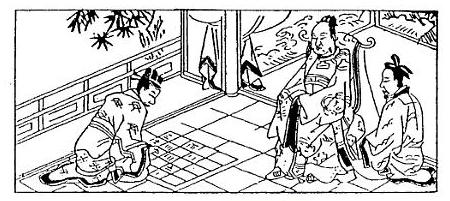
If the Japanese alphabet seems complicated, you might feel assured that learning and using numbers in Japanese is a straightforward process. Indeed, once you master the first 10 numbers, it could hardly be easier. Have you ever wondered why our numbers' names don't follow any particular pattern? How is it that we go from 'ten' to 'eleven', and where did 'twelve' come from? Why do our numbers finally find a form to follow only at thirteen? The numbers we know and use today reflect their German origins. Today's German number system has the same oddity as in English, including finding its rhythm at thirteen. By contrast, the Japanese number system is logical in the extreme. It too includes numbers 1-9 and includes zero. The only confusing part about using numbers in Japanese is that they can be represented differently. Kanji is used for less formal occasions while hiragana is generally used on formal documents. Note that Arabic numerals are widely used in Japan so, if you're out shopping, you'll be able to read price labels. You nevertheless need to learn how to say numbers in Japanese, so let's go on with our exploration. This depiction of an ancient counting board gives a hint at Japan's orderly number system. Source: Wikipedia Credit: Seijutsu Sangaku Zue There's no change in form or pattern no matter what number you count to, and another major difference between the Japanese and our more familiar numbers system is grouping. Like so many other societies, we group our numbers by units (single digits), 10s, 100s, 1000s and so on. By contrast, there are only four major numbers groups in Japanese: 10 (十- jū), 100 (百 - hyaku), 1,000 (千 - sen) and 10,000 (万 - man). Here's how Japanese numbers work, in a nutshell:
numbers from 0 to 9 are represented by their unique characters
any number from 10 to 99 features 十 (23 would be 二十三, 45 is 四十五 and 99 looks like 九十九)
any number from 100 to 999 features 百
any number from 1,000 to 9,999 features 千
any number from 10,000 on features 万
The remaining demarcations are 100 million (億 - oku), 1 trillion (北 - chō) and 1 quadrillion (京 - kei) . If you bought a car that cost £20,603, in Japanese, that number would be written out as 二万六百三 - literally 'two ten-thousands, six hundreds, three'. There's no need for placeholders (noughts) when writing Japanese numbers; the denomination is understood thanks to it's place in the sequence and its character. Another interesting divergence from numbers as we know them: we tend to mark off large numbers by the hundreds - 5,678,532, for instance. In Japan, 'thousand' is the demarcation value: 567,8532. This practice seems dissonant at first but, as you progress with learning Japanese language, counting by the thousands instead of the hundreds will become second nature. How about getting an early start on building that familiarity? Our companion article is designed to help you learn all about the Japanese numbering system.
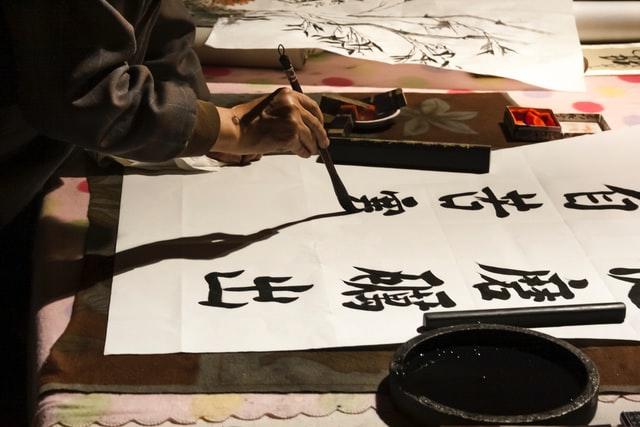
You might never have heard the hoopla surrounding a couple who named their firstborn Hashtag. This was at the dawn of Twitter; apparently those new parents have a passion for 128 characters. If you've never heard of Hashtag, who is now nearly 10 years old, then you've surely heard of Prince, haven't you? At the height of his fame, he changed his name to a symbol. that was supposed to be read 'The artist (formerly known as Prince)', parentheses and all. Even though most countries have guidelines for acceptable names, it's clear to see that western societies enjoy quite a bit of latitude when it comes to naming their kids. By contrast, if you're naming a child in Japan, you'd better have a good reason for deviating from their lists of approved names. And even if you do, you will not be allowed to name your child Satan, Devil or any other blasphemous or derogatory concept. Yes, concept. Because Japanese names, while on the surface perfectly ordinary, generally reflect deeper cultural values. Take the girl's name Umiko, as an example. It translates to Plum Blossom Child - evocative, meaningful... lovely. But that's not all there is to Umiko's story. Plum trees tend to blossom in adverse conditions - in snow and the chill of early spring, so assigning your daughter the Umiko name endows her with resilience and strength. Men looking to marry favour women named Umiko; it is considered a good, wifely name. Another popular method of choosing a name is by counting the number of pen strokes it takes to write it. Just like most other cultures, Japan has lucky and unlucky numbers; one way to shower luck on your newborn's life is to choose a name that takes a certain set of strokes to write. Beware of choosing an unlucky name, though; those that take a certain number of strokes to write could imbue your child with a lifetime of misfortune. Now, read more about Japan's unique naming practices... A Japanese name is fortunate or unfortunate depending on the number of brushstrokes it takes to write it. Photo by Marco Zuppone on Unsplash
Japanese Words and Phrases
こんにちは! Kon ni chiwa! Hello to you - yes, that is exactly what that says. It also means 'good afternoon' - as opposed to 'good morning' (おはようございます -ohayou gozaimasu) or 'good evening' (こんばんは - konbanwa). What about goodnight in Japanese? That would be おやすみ - oyasumi. Aren't Japanese greetings deliciously specific? Sometimes, people will practise an commonly-known word or phrase and spout it to support their claim of speaking a foreign language. Friends' Monica Geller is famous for a French line that... well, let's just say that, by using this trick, she possibly bit off more than she might have wanted to chew. That doesn't mean you should never greet your Japanese language teacher with a sincere こんにちは... or does it? In Japan, politeness and formality are hallmarks of the culture, thus, you should only greet your teacher - a person of authority and senior to you in that manner only if it is, in fact, after noon. Otherwise, you should greet them by the appropriate time-of-day greeting. As politeness is paramount, it should come as no surprise that is more than one way to say 'please' in Japanese, and they each apply to a different situation or condition.
use kudasai (下さい, or simplyさい) when you want your mum to hand you something from the far end of the table, or if you're giving the waitstaff your order in a restaurant. You can also use it to ask someone to sit down, or if you can borrow something.
use chōdai (頂戴 - or, as it is more often seen: ちょうだい) if you want a sip from a mate's drink. This 'please' is very informal
o negai shimasu (お願いします) is the default please, suitable for all situations
use dōzo (どうぞ) when giving permission - say, if your friend wants to borrow your book; it's the same as 'please do' in English
puriizu (プリーズ), this is please in katakana; a very informal 'please'; it's best to use it as sparingly as possible.
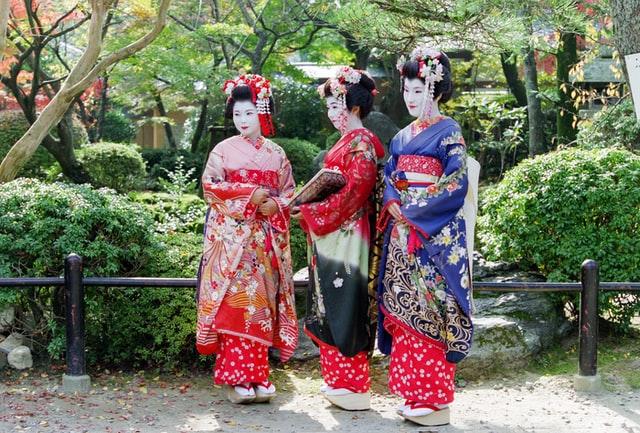
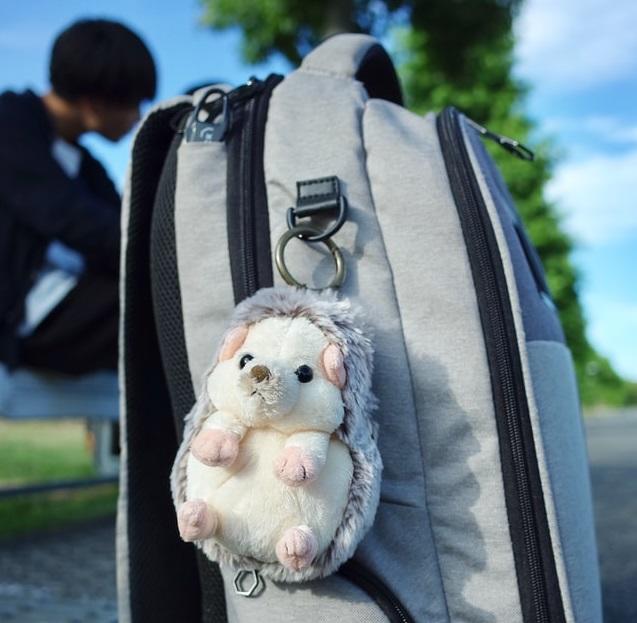
As a non-native Japanese speaker with few nice Japanese words at your disposal, you will likely be forgiven for not using the correct word or phrase but, if you plan a prolonged stay in the Land of the Rising Sun, mastering them is a must. Men and women both embrace the culture of cute in Japan. Photo by Shunsuke Ono on Unsplash
Japanese Pronunciation
If you're like most students, as you learn how to speak Japanese you'll want to pick up some cute Japanese words and other random words that sound cool. To close out this article, Superprof obliges. Your first dose of Japanese cuteness is, of course, kawaii (かわいい). The Culture of Cute prevails in Japan, that land of Totoro and Hello, Kitty; even mecha and horror anime feature kawaii elements. And of all the kawaii you can find in Japan, none is more endearing than decora (デコラ). Do you remember when you were a small child, plastering stickers all over yourself and running around the house thus-decorated? Maybe you even put a pillowcase on your head to pretend you had long hair... that, in essence, describes decora, a style that calls for one to decorate oneself using a variety of accessories. While out and about showing off your decora, you may say this utterly adorable Japanese phrase: Hoshi ga hoshii (星が欲しい) - literally 'I want a star'. Dreamy, no? In just about every language, repeating syllables call forth images of chubby-cheeked babies saying their first words: mama, dada and so on. However, it would be hard to beat the sheer cuteness of the Japanese word for peach. You would say momo (もも) whether you're describing the fruit or the colour. Do you watch anime? If so, you've likely heard the word dokidoki (ドキドキ) more than once. It's the Japanese language equivalent of 'heart going pitter-patter'; it means 'throb' as in 'heartthrob' and it's meant to convey a fast-beating heart. You might say dokidoki when eating moshi (もち), those adorable cakes made of glutinous rice. There is so much more to Japanese than using using the right honorifics and saying cute words the right way but ending this article that way invites you to a deeper dive into Japanese words and phrases...
Shoguns and Their Impacts on Japan Japanese shoguns ruled the country for more than 700 years, if we take the lean measure. They were often ruthless men, self-indulgent, and neglectful of their duties as leaders. However, more than a few are legendary, both for their wisdom, and their efforts to improve Japanese society. This article […]
The 4 Main Islands of Japan Japan is made up of four main islands. Honshu, the biggest of the four, is home to the Japanese capital of Tokyo as well as several other large cities. Hokkaido, to the north, is a popular holiday destination, especially when it comes to winter sports. In the south, we […]
Japanese Systems of Writing There are three types of writing systems in Japanese, and each one of them serves a specific purpose in a text. This is one of the main reasons why the language is often touted as being one of the most notoriously difficult to master, especially when it comes to reading comprehension […]
The Best Parks and Gardens in Tokyo Going to Japan is a great idea. The capital, Tokyo, is one of the most popular destinations in the world and with good reason: the museums, attractions, restaurants, theme parks, shrines, shopping centres, and parks. There are some fantastic things to discover in Japan, especially the parks and […]
A Guide to the Japanese Tea Ceremony “You're all late for tea!” - March Hare, Alice in Wonderland 4.1 million tonnes of tea are produced globally every year. This equates to 130kg per second. While China is the largest producer of tea, Japan is famous for its tea ceremony. Preparing tea in Japan is an […]
The Guide to Mount Fuji If you want to travel to Japan, you’ve probably already planned to visit the main cities like Tokyo, Osaka, and Kyoto. It’s true that there are a lot of things to do in the Land of the Rising Sun, whether it’s visit sprawling urban jungles or the history, temples, and […]
The Tourist’s Guide to the City of a Thousand Temples The ancient capital of Japan located near the Kamo river and part of the Kyoto prefecture, Kyoto is the 8th largest city in Japan by population with about 1.4 million residents. Home to hundreds of shrines, heritage sites, and festivals, the city is often considered […]
Entertainment in the Land of the Rising Sun Nippon is one home to one of the oldest civilizations on earth and, because of this, has witnessed countless examples of artistry in the forms of sculpting, painting, photography and film-making. Having influenced East Asian popular culture since time immemorial, Japan saw artistry flourish even in the […]
The Practical Guide to Japanese Folklore In Asia, there are plenty of different countries, each with their own diverse culture. Japan is one of the eastern countries that many people are interested in because of its cuisine, art, countryside, and cultural heritage. An estimated 20 million tourists will visit the country in 2020. Japanese culture […]
1 August 2026 ∙ 6 minutes to read
Summarise with AI:
Frequently asked questions
How can I start learning Japanese?
Make learning hiragana your opening move. Although Japanese uses three writing systems, hiragana is foundational. Even beginner Japanese textbooks start by teaching hiragana.
Can I teach myself Japanese?
It is absolutely possible to teach yourself Japanese; especially as self-study is made easier with technology. You can learn every aspect of the Japanese language by yourself but you need a conversation partner to truly work your speaking and listening skills.





 Loading...