There are many different ways you can learn Italian. For instance, you may enjoy Italian cinema or have a passion for Italian gastronomy. You may also be learning how to perfect your Italian accent through Italian tutoring.
There are thousands of Italian teachers around the world who can help you with your homework, grammar exercises, listening comprehension and your Italian pronunciation regardless of where you live.
Superprof is an online platform that helps each learner find their ideal in-home or online tutor for all kinds of subjects and budgets. Another option is taking an Italian language course at a language school in your spare time. And what about if you’re interested in music? As we’re going to see, the Italian language and music share a long history which spans several centuries.
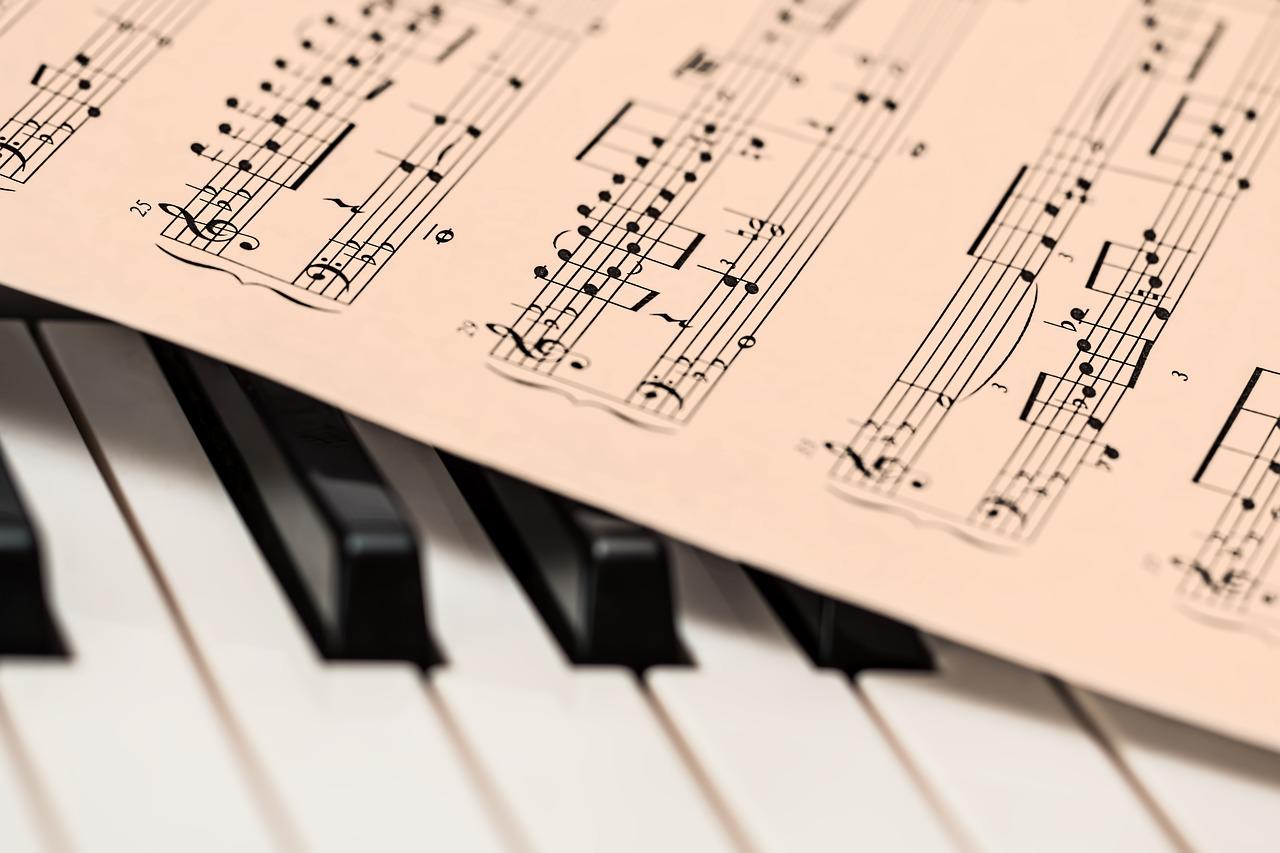
On top of Italy's world famous cuisine, Italian is the official language of music and Italy itself is also heavily associated with musical arts. This surprises a lot of people as English seems to have become the universal language between musicians and their fans ever since the dawn of blues, rock and jazz music. As well as the lyrics and titles, the musical terms that describe modern songs themselves (such as bridge, cover, medley, and mashup) tend to be in English. So, English is unsurprisingly recognised as an international language when it comes to trade, culture and art, but more recently, it has gained a lot of importance on the music scene, too. The classic hits of modern music have largely all been written in English by English-speaking artists. From Beat It by Michael Jackson to No Woman No Cry by Bob Marley, there is no end to the examples of hit songs from English-speaking countries which have known success all over the world. However, Italian, which is part of the family of romance languages, is a Latinate language which dominates classical music. English may dominate other disciplines, but music composition has remained very much Italian ¦ source: Pixabay - alenat This tradition goes back centuries and started long before blues, rock, R&B and rap were invented. The first traces of the Italian language being used in a musical context are from the Middle Ages:
Guido d’Arezzo (992 – 1033), inventor of modern musical notation
Petrarch (1304 – 1374), an Italian poet and initiator of the 14th century renaissance
But it was during the Renaissance period (from the 14th to the 18th century), which began in Italy and the city of Florence, that the music came anchored to this beautiful country shaped like a boot. This was an exciting period for Italy and the world of music alike, as modern Europe began to develop and make its mark on the rest of the world.
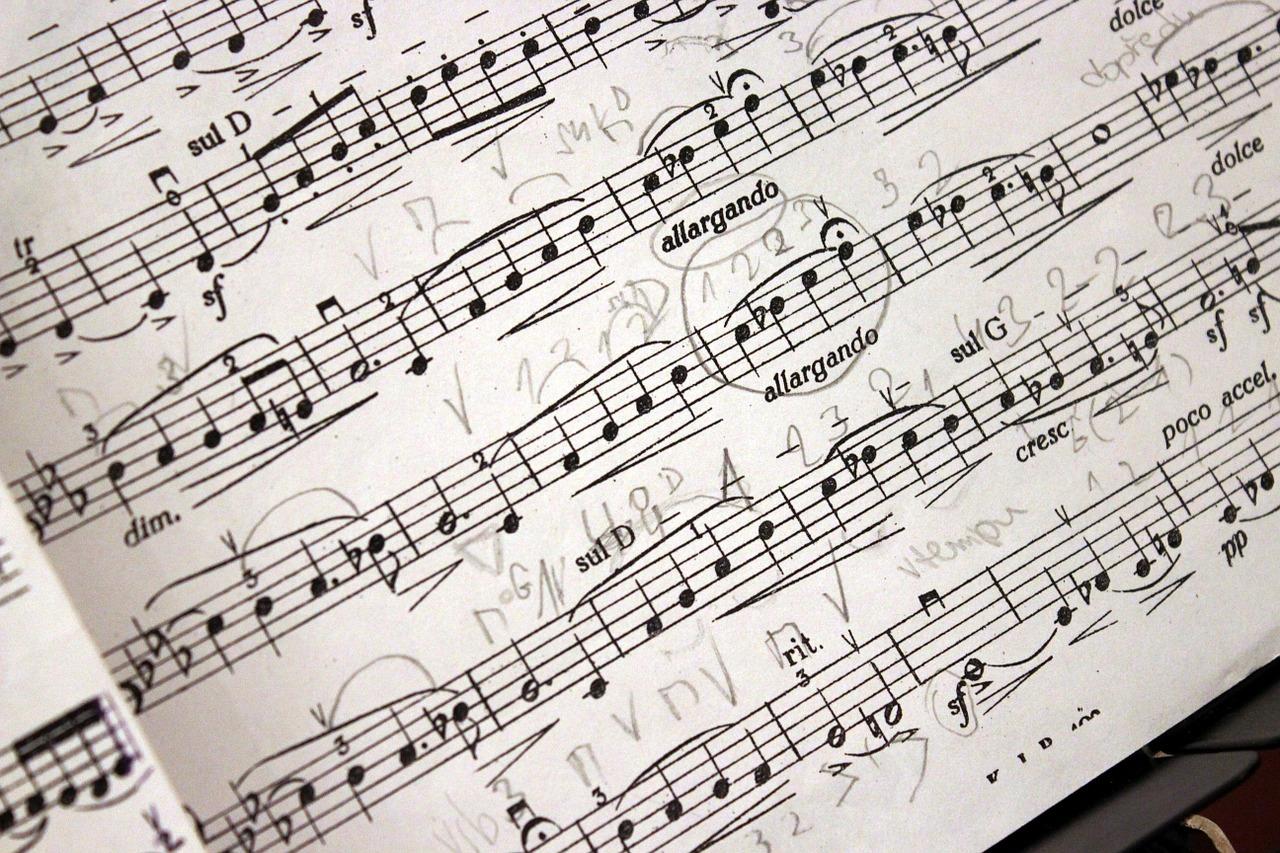
Italian Musical Terminology
It was during the Baroque period in particular that Italy, its composers and its musical language began to spread throughout the rest of Europe.
The Baroque period spanned the 17th and 18th centuries and heavily featured the harpsichord, a keyboard instrument from the period.
As the decades and centuries passed, Italian continued to dominate the language around music, as it still does in the classical music of today. Everyone is capable of taking part in this musical-linguistic heritage, even without being a native speaker of Italian! Here are a few examples of the Italian vocabulary you would be expected to learn as a classical musician, regardless of your level:
A cappella: Without instruments
Adagio: Slow
Allegro: Lively
Andante: At a walking pace
Concerto: Solo instrument accompanied by orchestra
Crescendo: Increasing in volume
Diminuendo: Becoming softer
Forte: Loud
Mezzo forte: Moderately loud
Pianissimo: Very quiet
Piano: Quiet
Poco a poco: Bit by bit
Presto: Fast
Tempo: Timing
These are just a few key examples, but the amount of vocabulary used in English music is incredibly extensive. For those learning a musical instrument today or are hoping to take it up, learning music theory does count as knowing some Italian - even if it seems you don't know anything 'useful' such as greetings, the Italian alphabet, days of the week in Italian or common Italian phrases and expressions. If you’d like to take your Italian learning further, why not call on the help of a teacher to help you in your language learning as well as your fluency in Italian as a foreign language? Hiring an Italian teacher or private Italian tutor as you learn about Italian grammar rules, verb conjugation, how to use adjectives, and common Italian words and phrases to use in Italian conversation will mean that you can ditch the phrasebook and get to know Italia for yourself. You find an Italian tutor near you or learn Italian online via Skype or other means of communication. You’ll also be able to go from speaking basic Italian to being fluent in your conversational Italian speaking, working on the melodic Italian pronunciation that makes the language so beautiful along the way.
The Italian language is known around the world for its beauty. It’s hard to find a more beautiful language than the one that is spoken on the other side of the Alps. Portuguese and French often grace our ears with their romantic phonetics, but there’s something about Italian… It’s no wonder then that the search for beauty in music usually finishes with Italian composers! You'll probably realise Vivaldi's Four Seasons or Verdi's Dies Irae from the very first chord ¦ source: Visualhunt - ancasta1901 Without needing to be a big fan of classical music and opera, we all know at least one composer of Italian origin who has made their mark on music as well as the history of art. Among these great composers and musicians from history are:
Gregorio Allegri,
Giovanni Gabrieli,
Claudio Monteverdi,
Antonio Vivaldi,
Antonio Salieri,
Francesco Cavalli,
Giuseppe Verdi,
Cesare Negri
Vincenzo Bellini,
Domenico Scarlatti,
Gioachino Rossini,
Giacomo Puccini,
Bruno Maderma,
Gaetano Donizetti,
These great names represent the centuries of scores, transpositions, crotchets, and minims which have not only allowed the Italian language to last as a musical language but which have also made Italian the language we most heavily associate with music. There are many ways you can learn about the Italian language and its music. You could go to a music school or even learn at university. During your higher education, you may have the opportunity to take optional classes alongside your degree. Why not choose a module in the history of art or even study Italian for beginners? You could take a trip to Italy for Italian language lessons as part of a language exchange in an Italian city – there really is no better way to learn a new language and learn to speak Italian fluently than by immersing yourself in Italian culture. So, knowing how to speak Italian could lead you to a career in music among many other possibilities – did you know that speaking Italian is a real asset in the fashion industry?
The Italian Language and Opera
So, we know that Italy’s musical history is a force to be reckoned with, but what about its modern music? The incredible talents of the Italians didn’t stop once the composers of the Renaissance died.
Italian contemporary music has also been blessed with the emergence of genius composers such as the world famous Ennio Morricone, Luciano Berio and Sylvano Bussotti.
Particularly at the time of the so-called ‘democratisation of opera’, which took place all over the world in the 1990’s, Italian opera singers flew the flag for Italian music once again. The Sydney Opera House is a symbol of opera's modern-day success ¦ source: Visualhunt - Alex wong Names such as Luciano Pavarotti, Andrea Bocelli, Roberto Alagna or even older ones such as Enrico Caruso, Mario Del Monaco and Carlo Bergonzi are all very familiar to us. Every one of these singers spoke Italian, the language of music, and this is a perfect example of how language and culture are often a match made in heaven.
Italian in Modern-Day Music
As you now know, Italian is the official language of music. Of course, being a musician and speaking Italian are two very different things, and Italian musical terminology is used as a part of English vocabulary, for example: ‘singing a capella’, ‘da capo’, ‘going to the opera’, ‘play those notes staccato’. But the influence of the Italian language on music doesn’t stop at classical and opera. Contemporary music is also influenced by modern Italian singers, whose songs are famous around the world:
Mina
Laura Pausini
Eros Ramazzotti
So, Italian is definitely a musical language in its sing-song intonation as well as its history and influence.
Find a private tutor on Superprof to help you master the Italian language:
Levelling Up: Beginner to Advanced Level While Learning Italian "You may have the universe if I can have Italy." -Giuseppe Verdi A fascination with the breathtaking boot-shaped nation known as Italy has transcended throughout centuries. Sometimes it seems as if there is nothing wrong with Italian culture. The food is mind-blowing, the architecture is beyond […]
Everything You Need to Know About Visiting the Vatican “You don't need to be more Catholic than the Pope” Visiting the Vatican is an essential part of any visit to the Italian capital. This small city-state is home to 799 inhabitants but visited by 6 million people every year. This means 7,509 tourists visit for each […]
How To Prepare for a Trip to Venice “In the glare of the day there is little poetry about Venice, but under the charitable moon her stained palaces are white again…” - Mark Twain When you go to Venice, you have to plan your trip according to how long you’ll be there for, the sites […]
What Is There To Do in Rome? A Mini Guide to the Eternal City “When in Rome, do as the Romans do” Is Rome Worth Visiting? What is Rome known for? The short answer is yes, but don’t just take our word for it… In this article we’ll be exploring the various answers to the […]
What’s There to See and Do in Sicily, Sardinia, and Capri? “I love places that have an incredible history. I love the Italian way of life. I love the food. I love the people. I love the attitudes of Italians.” - Elton John While Italy’s main cities like Rome, Naples, and Florence attract thousands of […]
Use Italian Culture To Learn How To Speak Italian Have you decided to learn Italian? That's a very good idea, congratulations! As with all foreign languages, learning and improving your Italian is sometimes part of the plan. Between tutor, budget and time, the learner must be motivated on a daily basis, and this is not […]
Our Advice for Living in Italy Travelling to Italy is fun, but living there is even better! If you’ve planned on living it Italy, here’s some ardvice for you! Before you set off, you need to plan for your future in the country. It doesn’t matter which Italian town or city you’ve decided to move […]
The Must-See Places In Italy When travelling to Italy, especially for the first time, it is interesting to know which Italian cities should be visited first. Should we visit Rome? Visit Milan? Visit Florence? If you are lost on the map of Italy, don't worry! Superprof will help you find your way around to make […]
Tips for Successful Italian language Courses The Holidays are just around the corner and already, people are formulating their resolutions for the new year. Might yours be to learn a second language? If so, how about learning Italian? People are also making their winter travel plans. Here's an idle thought: wonder how many Britons will travel […]






 Loading...