Learning a foreign language: smashing idea! You've settled on Italian?Good choice! Dante's language is perhaps the easiest of all romance languages to learn. The vocabulary and the sheer richness of the language will seduce you, just as the art of living Italian would. How do you put all of that fire and enthusiasm into practical learning of the language before actually making your way to country to experience that fabled lifestyle? Superprof has got you covered!Read on for tips on how to master Italian quickly.
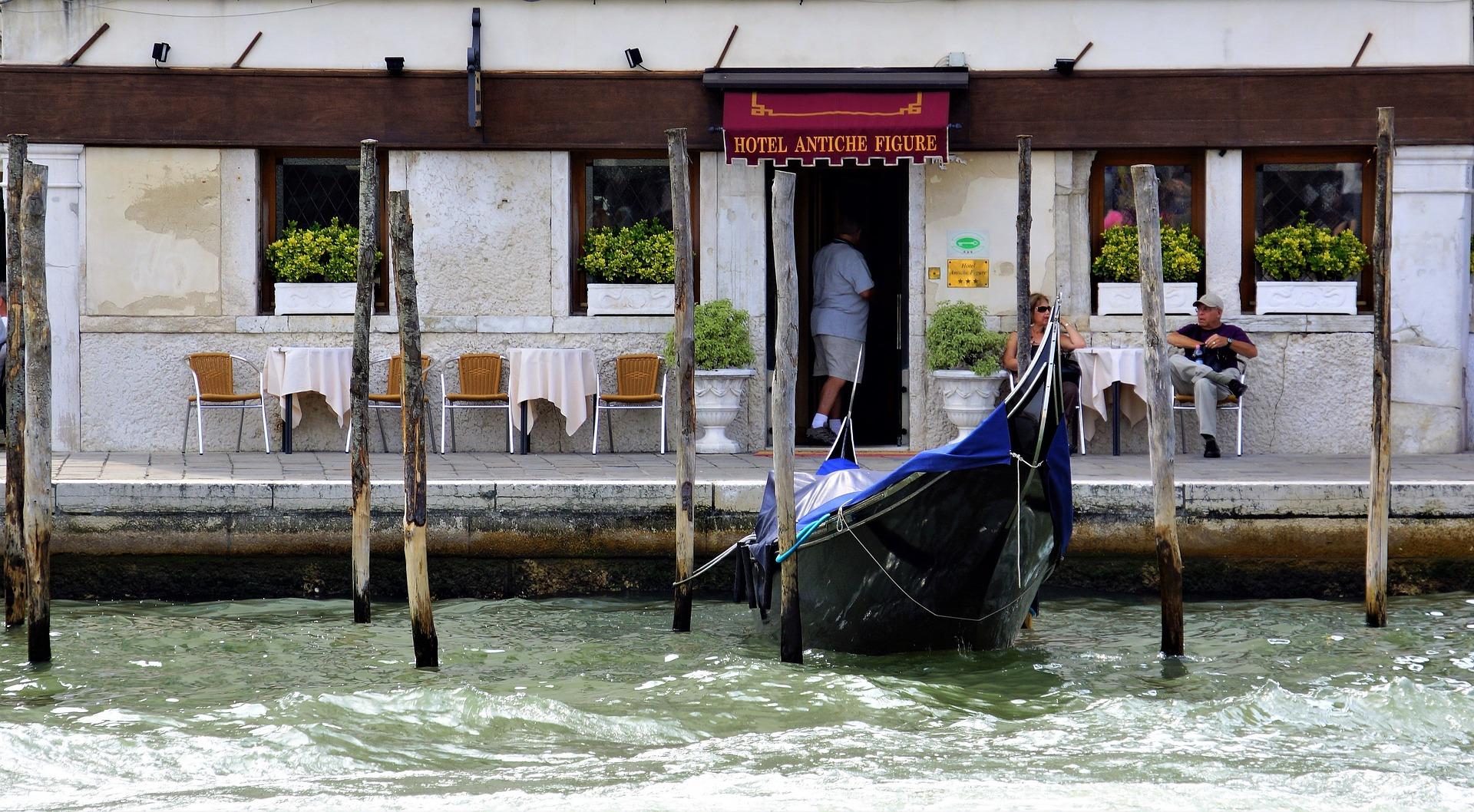
Considering the mellifluous quality of this romance language, it would be a shame to not learn it well. Here are our tips for learning Italian at home. And, Italy being one of the top five destinations for holiday travel, wouldn't it make sense to learn to speak the language? It would certainly be easier than learning tonal Mandarin or deciphering Japanese characters! In fact, you already know at least one Italian word, whether you've been to that country or not. The word umbrella is a direct import from Italian vocabulary. Superprof language tutors are standing by to teach you everything from buongiorno to buonasera, including scusi (good day, good evening and pardon me, respectively).Should you be planning a holiday in Tuscany, or even if you have the pleasure of meeting someone from Rome on our own British soil, you could be ready to converse with them after just a few sessions with us. Even more tempting: most of our tutors offer their first lesson free!Learn how to say buonsera before you holiday in Tuscany Source: Pixabay Credit: Cal Prest
Making Use of Free Resources
Online you will find many free Italian language resources such as English-Italian dictionaries that can help you learn individual words.
Collins Dictionary is always ready to help with all of your language needs – even word translation.
Word Reference is a dictionary page that includes a verb conjugation list in Italian, to help you learn them faster.
With Learn Language, you can practice a variety of phrases in Italian, grouped by category.
Be sure to take any or all of these guides with you as you head out on holiday, or carry them with you to study on the bus or tube.
What About Grammar?
Granted, Italian (and French and Spanish) grammar is a bit different than English grammar. Those three languages being romantic, they share many of the same grammar rules. English, being Germanic, does not have the same characteristics.Here are three major differences between English and Italian grammar:
gender assignment: each object is either masculine – il, or feminine – la.
Suffixes: -zione is feminine; -mento is masculine
word order: adjectives follow the noun – las cosas bellas, literally: the things beautiful
verb tenses: only five in Italian, compared with sixteen in English
beyond the present, past, future, imperfect and conditional, nuance in Italian is expressed through auxiliary verb usage.
See below the Top 100 of Italian verbs:
English
Italian
* = The translation of these verbs with only one word is very inadequate.
accept
accettare
allow
permettere
ask
chiedere/domandare
believe
credere
borrow
* prendere in prestito
break
rompere
bring
portare
buy
comprare
can/be able
potere
cancel
cancellare
change
cambiare
clean
pulire
comb
pettinare
complain
lamentarsi
cough
tossire
count
contare
cut
tagliare
dance
ballare
draw
disegnare
drink
bere
drive
guidare
eat
mangiare
explain
spiegare
fall
cadere
fill
rempire
find
trovare
finish
finire
fit
* far stare
fix
aggiustare
fly
volare
forget
dimenticare
give
dare
go
andare
have
avere
hear
sentire
hurt
* fare del male
know
sapere/conoscere
learn
imparare
leave
partire/andarsene
listen
ascoltare
live
vivere
look
guardare
lose
perdere
make/do
fare
need
* aver bisogno
open
aprire
close/shut
chiudere
organize
organizzare
pay
pagare
play
giocare
put
mettere
rain
piovere
read
leggere
reply
rispondere
run
correre
say
dire
see
vedere
sell
vendere
send
spedire
sign
firmare
sing
cantare
sit
sedersi
sleep
dormire
smoke
fumare
speak
parlare
spell
* fare lo spelling
spend
spendere
stand
alzarsi
start/begin
cominciare
study
studiare
succeed
* avere successo
swim
nuotare
take
prendere
talk
parlare
teach
insegnare
tell
dire
think
pensare
translate
tradurre
travel
viaggiare
try
provare
turn off
spegnere
turn on
accendere
type
* scrivere al computer
understand
capire
use
usare
wait
aspettare
wake up
svegliarsi
want
volere/desiderare
watch
guardare
work
lavorare
worry
preoccuparsi
write
scrivere
Putting it all Together
You learn Italian by eating Italian food. S. Strain
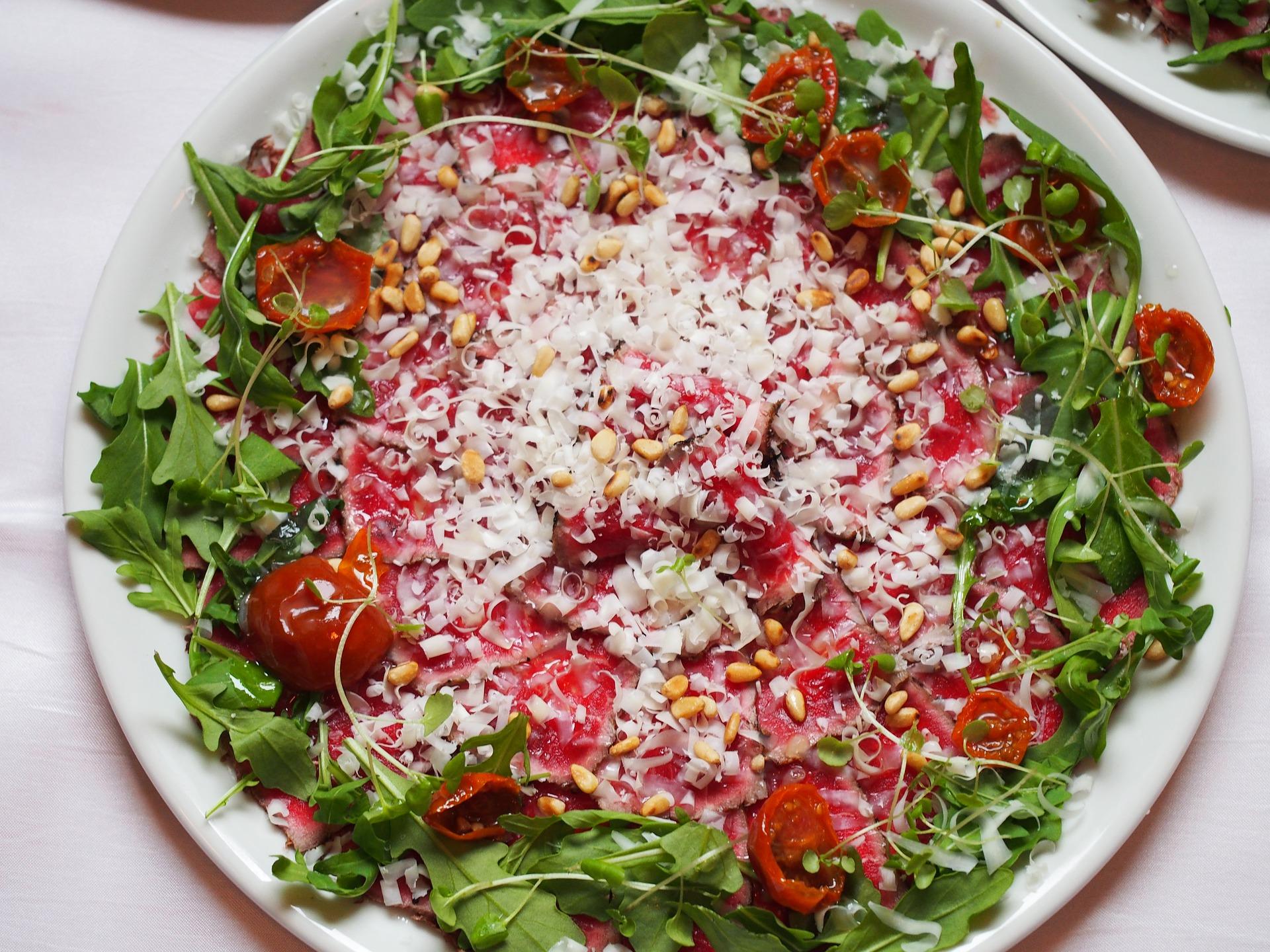
Of course, learning to speak the language of Dante Alighieri is a bit more involved than gnawing on osso bucco or twirling pasta, but there is some merit to that claim. If you wish to learn Italian, you should immerse yourself into the culture: listen to music, watch the movies, eat the food and talk to the people.That last, in particular, is a critical step in the language learning process.Once you have built up a bit of vocabulary, learned a few verb tenses and have practised word order, you should set about discovering the music of the language – its rhythm and flow. Here is where your Superprof tutor shines. Inasmuch as possible, you should speak Italian with your teacher, to practise tone and inflection.Your teacher would respond in Italian, a boost to your developing listening skills. Find and start taking Italian lessons Edinburgh. You won't learn Italian by eating carpaccio, but it sure does taste good! Source: Pixabay Credit: JereskokAt the coffee bar
Caffè – an espresso
Cappuccino – a breakfast beverage not to be ordered after lunch or dinner
Macchiato – an espresso “stained” with milk foam
Caffè shakerato – an espresso coffee shot shaken over ice forming a frothy summer treat
Caffè corretto – an espresso “corrected” with a nip of liquor, often grappa
Grappa – distillate produced from grape pomace, the leftovers from wine-making
Caffè americano – an espresso prepared in a cappuccino cup with hot water on the side of the cup not to be mistaken with…
Un americano – an aperitivo of Campari, sweet vermouth, and club soda
Cornetto – an Italian croissant pastry also referred to as a “brioche” in Northern Italy
Succo di frutta – fruit juice
Spremuta d’arancia – fresh-squeezed orange juice
Un bicchiere d’acqua – a glass of water
At the pizzeria
Pizza – a flatbread, often circular in aspect, baked with or without toppings
Mozzarella – cow’s milk cheese made by pulling or stretching the warm curd
Mozzarella di bufala – mozzarella cheese made with buffalo’s milk
Pomodoro fresco – fresh tomatoes
Salsa di pomodoro – tomato sauce
Basilico – basil
Origano – oregano
Acciughe – anchovies
Capperi – capers
Cipolle – onions
Peperonicni – red chilis, often dried and in flakes
Peperoni – bell peppers
Salame picante – pepperoni or spicy, cured sausage
Salsiccia – sausage
Ananas – pineapple, an unacceptable Italian pizza topping
Wurstel – hot dog, a passable Italian pizza topping
At the gelateria
Fiordilatte – “the flower of milk,” theoretically made with the best part of the milk, meaning the cream
Panna – cream made without egg yolk
Crema – cream made with egg yolk
Cioccolato – chocolate
Cioccolato fondente – dark chocolate
Nocciola – hazelnut
Gianduja – chocolate hazelnut
Bacio – also chocolate hazelnut, but easier to pronounce
Stracciatella – chocolate chip, but with chocolate flakes rather than chocolate chunks
Fragola – strawberry
Lampone – raspberry
More – blackberry
At the paninoteca
Panino – an Italian sandwich
Panini – more than one Italian sandwich. Panini is plural.
At the salumeria
Prosciutto di Parma – salt-cured, air-dried ham, aged in or around Parma for months.
Prosciutto San Daniele – salt-cured, air-dried ham from San Daniele in the Friuli region of Northeastern Italy
Speck – dry-cured, smoked ham from Northern Italy
Coppa (in Lombardy and Emilia Romagna) – a cured sausage made of pork shoulder
Coppa (in central Italy) – a cured sausage made of pork head
Finocchiona – fennel-flavoured cured pork sausage
Guanciale – cured pork jowl
Pancetta – pork belly, cured but not smoked. It’s bacon with an Italian accent.
Pancetta affumicata – smoked pancetta
Porchetta – spit-roasted stuffed pig
Ingredients/dishes to look for
Bottarga – salt-cured fish roe often from Sardinia or Sicily
Bruscandoli – hop shoots
Foccacia di Recco – a very thin flat bread filled with cheese. Arguably the most delicious thing you are likely to eat in Italy. Look for it in select parts of the Ligurian coast.
Frico – fried cheese served in Friuli
Granita – Sicilian shaved ice
Mascarpone – Italian cream cheese
Moeche – soft-shelled crabs from the Venetian lagoon
‘nduja – spicy, spreadable pork sausage from Calabria
Ricci di mare – sea urchins, served seasonally in Puglia and Sicily
Funghi porcini – mushrooms with a big brown cap
Tartufo Nero – black truffle, found year-round
Tartufo Bianco – white truffles, available late fall to early winter
Good to know
Colazione – breakfast
Pranzo – lunch
Cena – dinner
Merenda – snack, commonly acceptable only if you are under the age of ten
Pane – bread
Olio extra Vergine di oliva – EVOO
Formaggio – cheese
Carne – meat
Pesce – fish
Pollo – chicken
Maiale – pork
Cinghiale – wild boar
Di stagione – in season
Fuori stagione – out of season
Andato a male – gone bad
Vino – wine
Rosso/biano – red/white
Vino della casa – house wine
Vino della zona – wine produced nearby
Il conto – the check
Coperto – service charge, normally included in the check
Compreso – included
Escluso – excluded
Un’altra grappa, per favore – another grappa, please
Even better to know
“Conosco i miei polli.”
Literally – I know my chicken. What it means – I know what I am talking about
“Sei come il prezzemolo.”
Literally – You are like parsley What it means – You pop up everywhere.
“Non fare il salame.”
Literally – Don’t act like salame. What it means – Don’t be a ham, you idiot.
“Non tutte le ciambelle riescono col buco.”
Literally – Not all donuts come out with a hole. What it means – Things don’t always turn out as expected.
“Non puoi avere la botte piena e la moglie ubriaca.”
Literally – You can’t have a full wine barrel and a drunk wife. What it means – You can’t have your cake and eat it too.
Flash Cards and Vocabulary Lists
You have just completed a greatItalian lesson online: you are on fire with the need to express yourself using your newly-learned words! Don't fall victim to the como dire (how to say it) quandary: build vocabulary lists, or make flash cards. Too old-fashioned a solution to modern learning, you say?Not at all!Writing by hand has been proven to boost retention of learned material, even more so than typing data into a notebook or tablet.Writing will help you better retain:
vocabulary
grammar rules
speech patterns
phonetics of the language
One additional suggestion: you should you study your flash cards before falling asleep. Your brain will efficiently file away all that you have learned for easier recall during future lessons.
Formal and Informal Language Learning
Superprof knows that language learning – or, for that matter any learning should be fun and engaging. Let us now propose a few avenues of informal learning that will fan the flames of your desire to learn Italian between classes.
There is no better way to immerse yourself in language learning than to surround yourself with Italian dialogue.
Short of moving to Naples, the closest you could come to that effect while still at home in the UK is to watch Italian movies... without changing the soundtrack to English. Improve auickly with a by taking Italian courses London. An added benefit to such movies is that you will be exposed to Standard Italian; not any of its estimated thirty-four dialects.Here are a few titles to consider:
La Vita è Bella – Life is Beautiful; a poignant classic
Il Gattopardo – The Leopard; featuring an international cast
any of Nanni Moretti's films, such as: La Stanza de Figlio – the Son's Room; or Caro Diario (Dear Diary)
Are you rather into television series?
You might then binge on Gomorra, a series about Neopolitan mafia's competition with the Camorra family business.
It launched in 2014 to critical and public acclaim, running for 2 series; a total of 24 episodes.
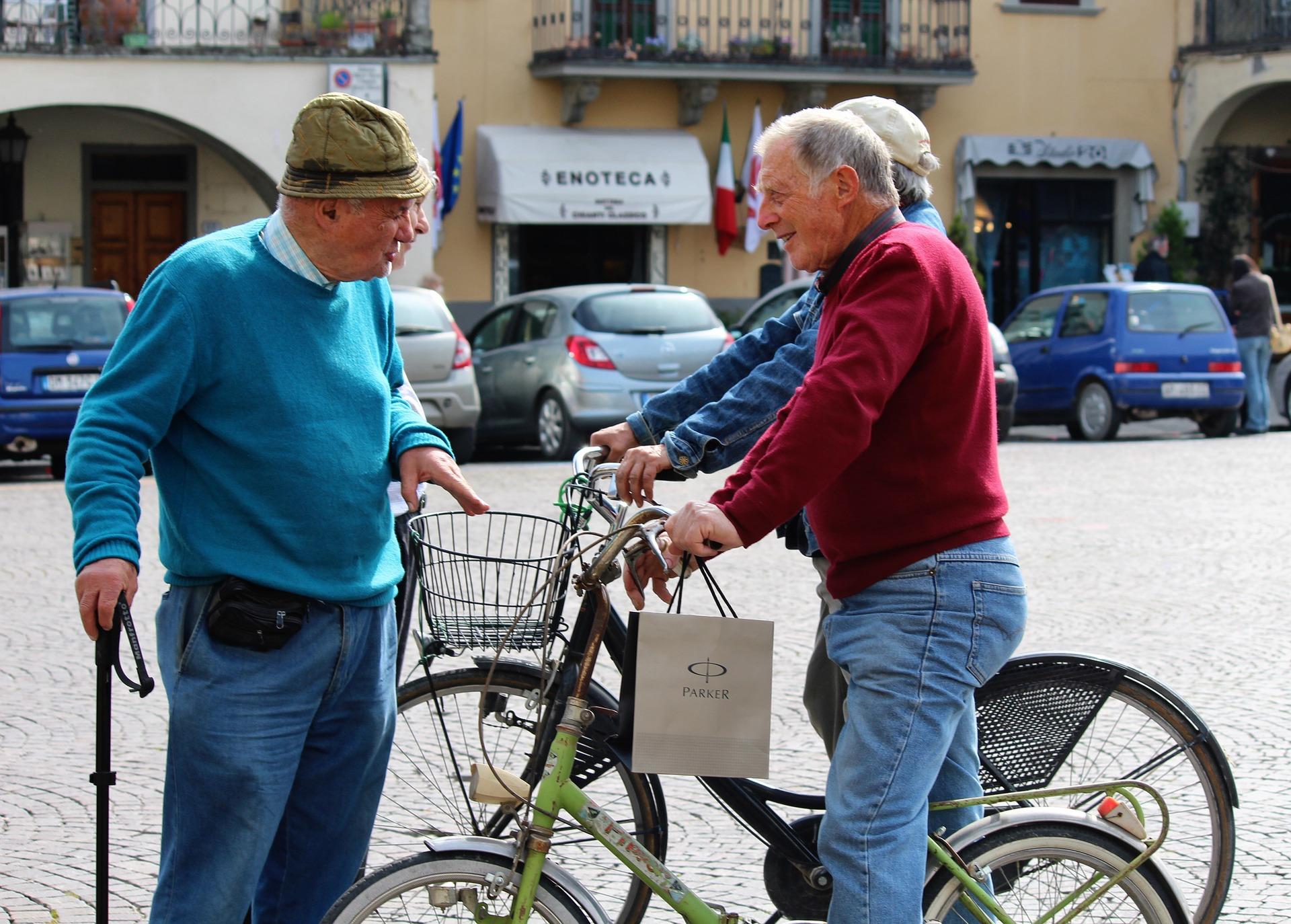
It will be an education into authentic Italian mafia! If the mafia is indeed your thing...Cast about for Romanze Criminale, a 2008 story broadcast in 2 series, for a total of 12 episodes. It revolves around a Roman gang looking for their fortune.Luckily, we live in a time of ultimate connectivity, where a simple online search can reveal all of the Italian entertainment you could wish for. There is no longer any need to wait for a Foreign Film Festival to see the latest and greatest of what Italy has to offer! Check for Italian conversation classes London. Italians are generally friendly and effusive Source: Pixabay Credit Yenni Vance
Speak Italian with Italians
In spite of all the Mafia-related television shows, people native to Italy tend to be a friendly bunch; open and appreciative of anyone who wants to learn anything authentically Old Country. With the number of Italian expats who now prefer Great Britain over Germany as their country of choice to settle in, you are more likely than ever to run into a newly arrived Napoli or Sicilian!Let us not greet them with typical British reserve. We should meet them with open minds and our developing language skills! You could surely approach any Italian expat, explain that you are learning their language and ask them to help you practice your speaking skills. You may have to ask them to slow down their speech. In their enthusiasm and joy at knowing your desire to perpetuate their culture by learning their language, they may embrace your efforts with verve and staccato speech. Staccato: another fine Italian import into the English language. In return for their helping you practice your language skills, you could help them find their way around town or maybe even get them familiar with British slang!
Organise a Learning Trip
If your peak of language learning coincides with your next holiday, why not do a Tour of Italy? Air fares to Rome, Milan, Naples and Pompeii are fairly low, especially as we approach the tourist off-season. You could hike the Appian Way, meeting like-minded folks from all over the country who want to enjoy this ancient military road, and who would most likely delight in exchanging culture and language with you. Or you could just stick to the cities. Whether sipping espresso or reflecting on architecture over a bruschetta, applying your language skills among native speakers, in authentic settings is sure to improve your fluency. Better than any language course could teach you, ordering from a menu and having conversation with new friends will help you build proficiency in lingua Italiano. Soon, you too will be able to order the most famous Italian dishes from all over the country!
What About Cooking Italian Food?
Our modern cooking style makes it easy to prepare spaghetti or chicken Alfredo for our evening meal.
Opening up a tin or heating up a frozen meal does not an Italian chef make.
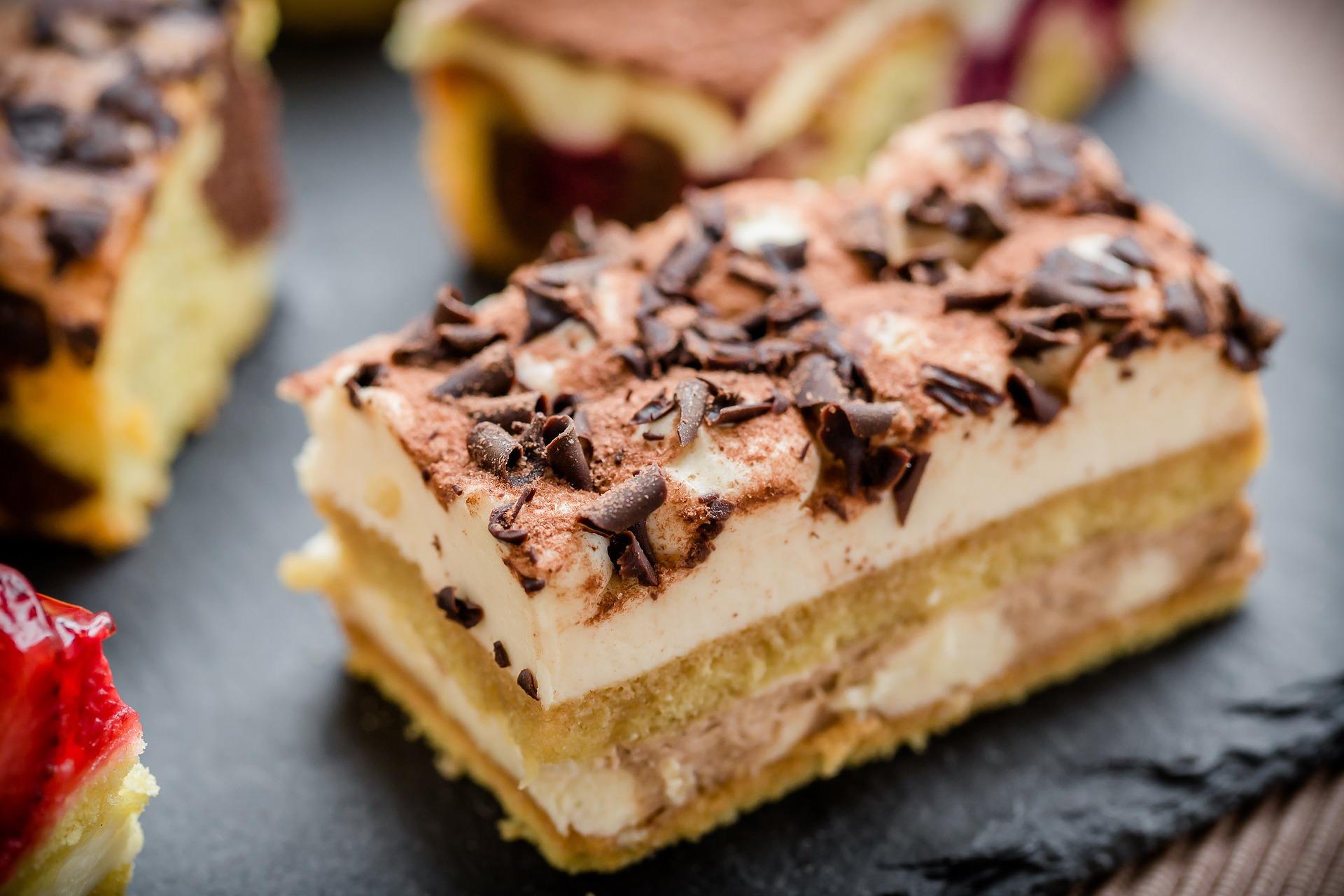
Another fun, engaging way to learn Italian culture would be to take a cooking class. All around the UK, you can find restaurants or cooking schools that offer classes in Italian cooking. How's that for a delicious way to learn Italian speaking: while making tiramisu?One last suggestion, for the novice learner and the advanced: read books in Italian!Reading in Italian gives you a means to absorb Italian phrases not found in textbooks and perhaps not used in any travel phrase book. Whether you read basic Italian or spent two years in Venice, reading (in any language) is a great way to exercise your brain, disconnect from the stress of everyday activity and treat yourself to language learning outside of any language courses. Check out these Italian courses Manchester. Snack on tiramisu you made in your cooking class while practising your Italian Source: Pixabay Credit: Thuja
Preparing for Italian Lessons
Of course, you could jump right into learning Italian: watch the movies, listen to music, read news articles...However, your studies would be much more focused if you had an idea of what depth and aspect of the Italian language would best suit you. 1. Conversational Italian would be great for holiday-makers or if you want to diversify your friendship circle. 2. Italian grammar and vocabulary is a must if you are pursuing academic studies, or if you hope to move to Italy. You should also determine your language aptitude. Are you a beginner, intermediate or advanced language learner?
The lessons you subscribe to should match your ability.
You've just enjoyed a great holiday in Italy and now wish to learn the language so that, when you go back next year, you can enjoy it more fully. It is quite common that, after a positive experience, one wishes to repeat it – only with more preparation, in order to get the most out of it. If all you can do is long for Sicily's sandy beaches, maybe you should tune in to Eiffel 65, a band whose leading member is from your dream destination. Could you learn Italian from their songs? And who doesn't know of Andrea Bocelli, the crossover artist who renders pop ballads as gracefully as he does opera? His Italian pronunciation is absolutely one to aspire to! Think about singing, on your way to work or in the shower, in accompaniment with singer, songwriter and composer Paolo Conte; such a fun way to learn this romance language! Via Con Me, Un Gelato Al Limon, Come Di: all of these and more are online, just waiting for you to give them a listen.Studies show that engaging in diverse learning methods and having fun while learning increases the absorption of materials and provides more opportunity to practise recently reviewed materials. What are you waiting for? Andare! Go!
Until Your Next Lesson...
It might be a bit asinine to repeat what your parents and teachers have long been telling you: revise between lessons. That being the most effective way to retain vocab and grammatical constructions, we echo their edict.
The Best Ways To Memorise
Label everything around you When you start learning the Italian language, the first vocabulary words you learn are focused on representing yourself and your surroundings. Make signs to mark the various appliances and pieces of furniture in your home. As you go about your day, these signs will remind you that you keep juice in “il firgorifero” and go to dream in “il letto“. You can apply this strategy to pictures as well. For example, you can print a picture of a person and label the various parts of their body in Italian, such as gamba (leg), testa (head), dito (finger) and orecchio (ear). This tactic works great because you learn to connect words with mental images. Learn words in the proper context Instead of only learning that correre means “to run,” you might find you retain the word better by learning it as part of a sentence. Create a plain sentence such as “I like to run.” or “Mi piace correre.” By learning the word in setting, you will remember the word and its meaning easier. As an added benefit, it allows you to exercise and learn other Italian vocabulary words at the same time. Practice with as many flashcards as possible Flashcards have long been a popular memorization technique because they’re a highly efficient way to learn new words. While you can use traditional writing flashcards, there are many flashcard apps you might like. Below are our three favorite flashcard applications. Create mnemonic devices of your own Mnemonic devices are another excellent way to memorize Italian thesaurus lists. Basically, you’re creating a familiar maxim or a short song to help you memorize something that would unless be difficult to remember. In other words, it’s all about association. For example, the Italian term for “to believe” is “credere“. The beginning of this word looks and sounds similar to the English word “creed”. Because a creed is set of beliefs, making this combination can boost your ability to remember “credere“. Write a short story in Italian When learning a list of Italian vocabulary expressions, create a narrative that links the words. It doesn’t matter how absurd your story is, as long as it creates a vivid image in your brain. If you don’t know a word in Italian, simply use the English word in its place for now. As your vocabulary increases, you can start translating the remaining words into Italian and making your story more complicated. For example, if you were studying animal names in Italian, your story might start with: “Il cane (the dog) chased un gatto (a cat) that was running after un topo (a mouse).” No matter which tactics you want to use, practising your vocabulary everyday is important for long term memory. In most cases, it is better to dedicate 15 minutes to practising Italian every day than to spend several hours once a week without studying what you’ve studied in between sessions. For good reason: for all of you who wish to throw yourselves into a new language, you cannot afford to go a single day without speakingand listening to Italian. Movies, music, books and friends: all ways to steep yourself into your language lessons, until the next time that classes convene – or your tutoring resumes.Until then, we say Ciao, caro! Check out where to learn Italian Glasgow.






 Loading...