


Elements can be hazardous in many ways. Some are toxic, some are corrosive, some are radioactive, and some are reactive. Danger depends heavily on context, but here are 15 elements that could be very dangerous if encountered the wrong way.
Key Takeaways
- The most dangerous elements can harm people through toxicity, radioactivity, corrosiveness or extreme chemical reactivity.
- Polonium is one of the strongest candidates for the most dangerous element because internal exposure to its alpha radiation can be particularly hazardous.
- Radon, mercury, arsenic and lead are especially important because people can encounter them through realistic environmental or occupational exposure routes.
- Chemical form matters, so an element can behave very differently from the compounds or ions that contain it.
- An element's real risk depends on factors including dose, exposure route, isotope, chemical form, and how likely it is to be encountered.


The Top 15 Dangerous Elements on the Periodic Table
The elements we've included can harm the body or environment in various ways. Some are dangerous immediately, while others can cause great harm through repeated exposure. It's worth considering each element's unique hazards, how to handle it safely (if you even have to), and where you're likely to find it. Where an element sits within the periodic table groups can also tell us a lot about its chemical behaviour.
No official scientific ranking exists for the world's most dangerous elements. This list considers toxicity, radioactivity, chemical reactivity, possible routes of exposure and how realistically people may encounter each element. A substance can therefore be extremely hazardous without necessarily posing the greatest everyday risk.²
| Rank | Element | Symbol | Atomic number | Main hazard |
|---|---|---|---|---|
| 1 | Polonium | Po | 84 | Internal radiological hazard |
| 2 | Plutonium | Pu | 94 | Radioactivity and internal contamination |
| 3 | Radon | Rn | 86 | Radioactive gas and lung-cancer risk |
| 4 | Mercury | Hg | 80 | Toxic vapour and neurotoxicity |
| 5 | Arsenic | As | 33 | Acute and chronic toxicity |
| 6 | Lead | Pb | 82 | Cumulative neurological toxicity |
| 7 | Thallium | Tl | 81 | Severe systemic toxicity |
| 8 | Cadmium | Cd | 48 | Kidney and respiratory toxicity |
| 9 | Beryllium | Be | 4 | Serious respiratory disease |
| 10 | Fluorine | F | 9 | Extreme chemical reactivity |
| 11 | Chlorine | Cl | 17 | Toxic inhalation hazard |
| 12 | Radium | Ra | 88 | Ionising radiation |
| 13 | Uranium | U | 92 | Radioactivity and heavy-metal toxicity |
| 14 | Bromine | Br | 35 | Corrosive liquid and toxic vapour |
| 15 | Antimony | Sb | 51 | Toxic dust and compounds |
1. Polonium (Po)
84
Radioactive post-transition metal
Intense alpha radioactivity, particularly dangerous if it enters the body
Specialist research, alpha sources and limited antistatic applications⁶
Requires specialist radiological containment and monitoring¹
2. Plutonium (Pu)
94
Radioactive actinide
Radioactivity and internal contamination
Nuclear applications, scientific research and radioisotope power sources⁵
Requires specialised containment and radiation-protection measures¹
3. Radon (Rn)
86
Radioactive noble gas⁴
Long-term inhalation increases the risk of lung cancer⁷
Limited specialist scientific and medical applications⁴
Indoor concentrations can be tested and reduced using appropriate building measures⁷
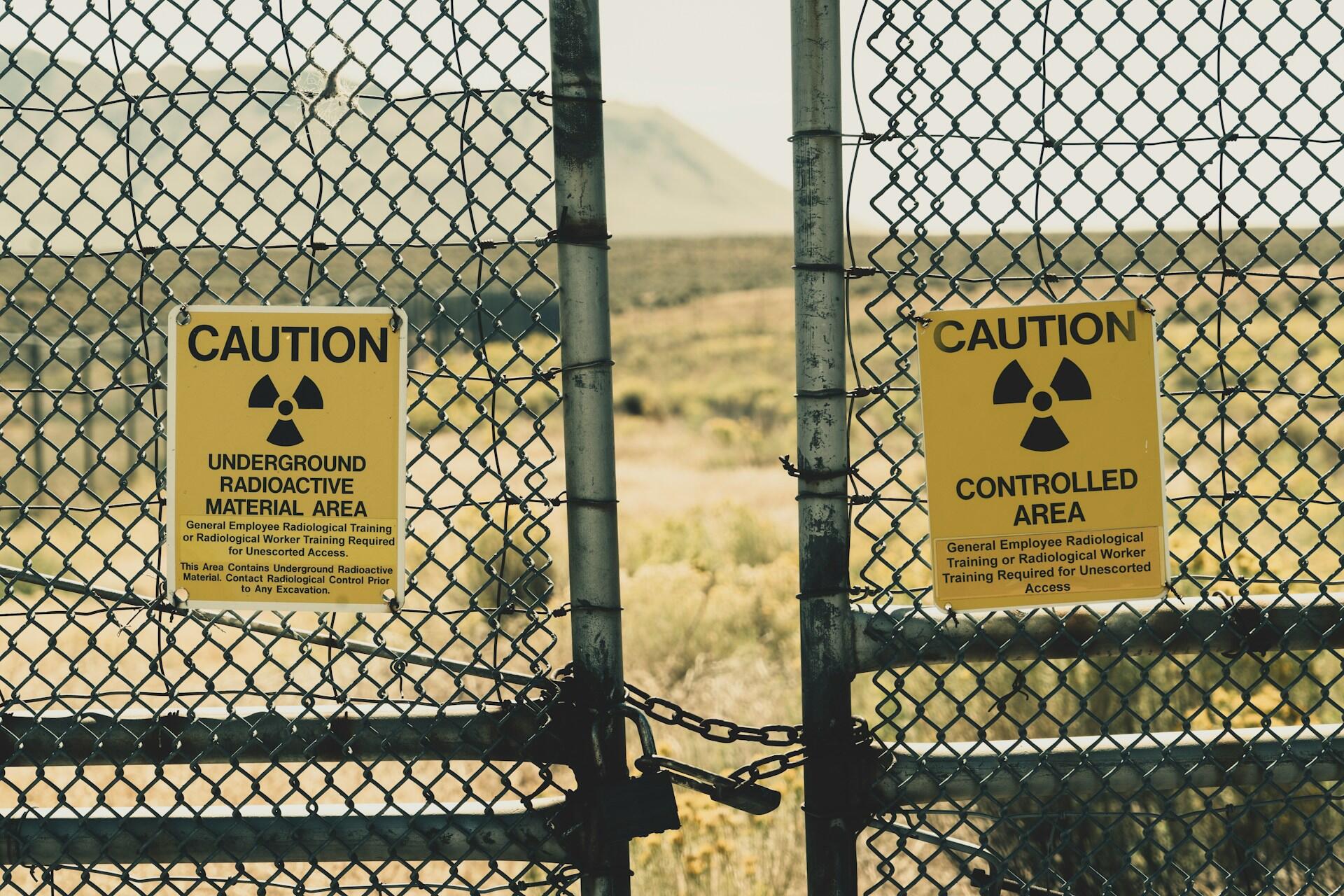
Radioactive elements release ionising radiation as unstable atomic nuclei decay. The type of radiation matters because alpha particles, beta particles, and gamma rays differ in how far they can travel and how deeply they can penetrate matter. A radioactive substance that enters the body can therefore present a different hazard from an external radiation source.¹ Radon is unusual among the noble gases because all of its known isotopes are radioactive.
4. Mercury (Hg)
80
Transition metal⁴
Toxic vapour and compounds can damage the nervous system and other organs¹⁰
Specialist electrical, industrial and dental applications⁴
Exposure to mercury vapour and other hazardous forms should be minimised¹⁰
5. Arsenic (As)
33
Metalloid⁴
Inorganic arsenic is highly toxic and long-term exposure can increase cancer risk⁸
Semiconductors, specialist alloys and glass manufacture⁴
Prevent contaminated-water exposure and control occupational contact⁸
6. Lead (Pb)
82
Post-transition metal⁴
Cumulative toxicity, particularly affecting the nervous system⁹
Lead-acid batteries, radiation shielding and specialist industrial applications⁴
Control dust, fumes and contact with contaminated materials²
Mercury, Lead and Arsenic Compared
Mercury
- Different chemical forms have different hazards.
- The nervous system is a major target of exposure.
- Vapour and contaminated food are key routes of exposure.¹⁰
Lead
- Exposure can accumulate in the body over time.
- Children are particularly vulnerable to neurological effects.⁹
- Batteries remain one of its major modern uses.⁴
Arsenic
- Inorganic arsenic is especially hazardous.
- Long-term exposure can increase the risk of several cancers.
- Contaminated groundwater is an important exposure route worldwide.⁸
7. Thallium (Tl)
81
Post-transition metal
Severe systemic toxicity
Specialist electronics, optical materials and scientific applications⁴
Prevent inhalation, ingestion and skin exposure in controlled environments²
8. Cadmium (Cd)
48
Transition metal⁴
Kidney and respiratory toxicity, particularly from dust and fumes³
Batteries, coatings, pigments and specialist alloys⁴
Control airborne material with appropriate workplace measures²
9. Beryllium (Be)
4
Alkaline-earth metal⁴
Inhaled dust or fumes can cause serious respiratory effects³
Aerospace components, specialist alloys and X-ray equipment⁴
Use engineering controls to prevent airborne exposure²
10. Fluorine (F)
9
Halogen⁴
Extreme chemical reactivity and powerful oxidising behaviour³
Production of specialist chemicals, polymers and industrial materials⁴
Requires controls appropriate to its highly reactive nature³
Some dangerous elements become a greater risk when industrial processes create airborne dust, fumes or vapours.
Beryllium and cadmium are examples where inhalation is a key occupational exposure route, so professional workplaces use controls to keep hazardous material out of the breathing zone.²

11. Chlorine (Cl)
17
Halogen⁴
Toxic gas that can severely irritate the respiratory system and eyes³
Water treatment, PVC production and chemical manufacture⁴
Use containment, ventilation and controls designed for toxic gases²
Chemical form can completely change how an element behaves. Elemental fluorine is an extremely reactive gas, and elemental chlorine is toxic when inhaled, but fluoride and chloride ions in compounds have very different chemical properties.⁴ Mercury also exists in elemental, inorganic and organic forms that differ in how people are exposed to them and how they affect the body.¹⁰
12. Radium (Ra)
88
Radioactive alkaline-earth metal
Ionising radiation from radioactive decay
Historic luminous paints and limited specialist applications⁴
Requires regulated radiation-protection procedures¹
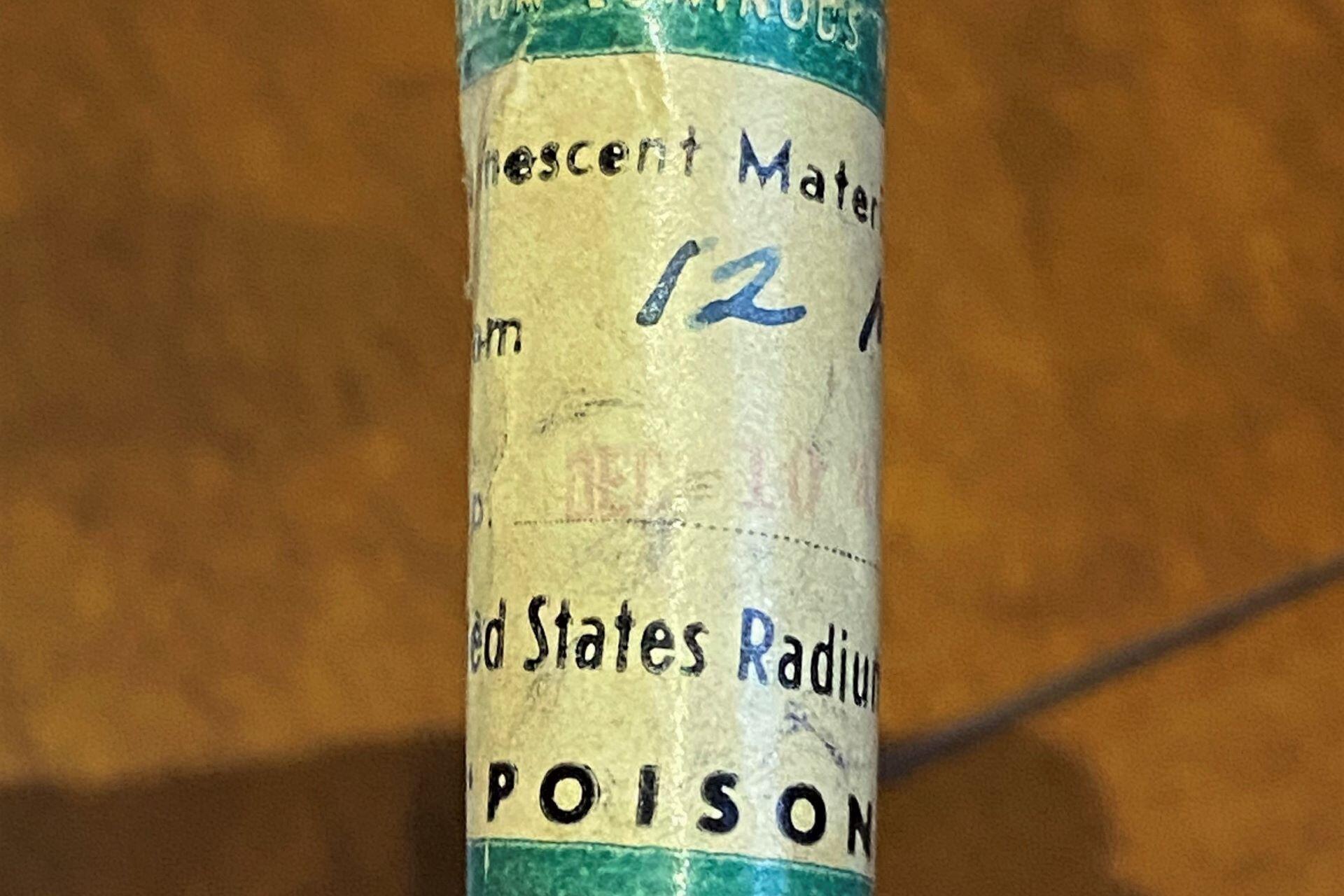
Radium and Luminous Paint
Radium compounds were once used in luminous paints for watches, clocks and instrument dials.
As understanding of the health effects of ionising radiation improved, these applications showed why radioactive materials require strict controls rather than ordinary chemical handling.¹
13. Uranium (U)
92
Radioactive actinide⁴
Radioactivity combined with heavy-metal chemical toxicity³
Nuclear fuel and specialist scientific applications⁴
Requires controls appropriate to radioactive materials¹
14. Bromine (Br)
35
Halogen⁴
Corrosive liquid producing harmful and irritating vapours³
Pharmaceuticals, industrial chemicals and some flame-retardant materials⁴
Requires controls that minimise contact and vapour exposure²
15. Antimony (Sb)
51
Metalloid⁴
Dust and some compounds can present occupational health hazards³
Alloys, semiconductors and flame-retardant materials⁴
Control dust and maintain appropriate occupational hygiene²
Criteria for Determining Elemental Danger
Because danger isn't uniform across contexts and risk types, remember that elements aren't automatically dangerous or safe. Think about toxicity and radioactivity, the amount involved, the route of exposure and the likelihood of someone actually encountering it. Terms like toxic are thrown around too readily without considering toxicity as a concept, for example. Everything is relevant, and we've purposefully included the atomic number, which tells us how many protons are found in its nucleus. This may seem irrelevant if you're new to chemistry, but as you study more, you'll see how it can tell you more about an element.
- Toxicity: how strongly an element can disrupt normal biological processes.
- Dose: how much reaches the body and how long exposure lasts.
- Radioactivity: the type and amount of ionising radiation emitted.
- Reactivity: how readily the element reacts with other substances.
- Exposure route: whether it is inhaled, swallowed, absorbed or encountered externally.
- Chemical form: compounds of the same element can have very different hazards.
- Isotope: radioactive isotopes of the same element can differ in their decay and risk.
A "dangerous" element isn't dangerous if you're only ever going to find it in tiny amounts or in a form that isn't particularly harmful. Elements aren't inherently dangerous or safe. It's more about the factors above that can make an element dangerous, such as how it reacts to certain things or circumstances.
Safety measures depend on the specific hazard and how exposure could occur. Professional workplaces assess factors such as the substance, concentration, and task before choosing controls, including containment, ventilation, and protective equipment.² Radioactive materials require additional measures designed to limit exposure to ionising radiation.¹
References
- Health and Safety Executive. “Ionising Radiation: Protecting Workers and Others.” HSE, 11 Feb. 2025, https://www.hse.gov.uk/radiation/ionising/protection.htm. Accessed 8 Oct. 2026.
- Health and Safety Executive. “Principles of Good Control Practice.” COSHH, https://www.hse.gov.uk/coshh/detail/goodpractice.htm. Accessed 8 Oct. 2026.
- National Institute for Occupational Safety and Health. “NIOSH Pocket Guide to Chemical Hazards: Index of CAS Numbers.” Centers for Disease Control and Prevention, https://www.cdc.gov/niosh/npg/npgdcas.html. Accessed 8 Oct. 2026.
- Royal Society of Chemistry. “Periodic Table.” Royal Society of Chemistry, https://periodic-table.rsc.org/. Accessed 8 Oct. 2026.
- Royal Society of Chemistry. “Plutonium.” Periodic Table, https://periodic-table.rsc.org/element/94/plutonium. Accessed 8 Oct. 2026.
- Royal Society of Chemistry. “Polonium.” Periodic Table, https://periodic-table.rsc.org/element/84/polonium. Accessed 8 Oct. 2026.
- UK Health Security Agency. “UKHSA and BGS Publish Updated Radon Map for Great Britain.” GOV.UK, 2 Dec. 2022, https://www.gov.uk/government/news/ukhsa-and-bgs-publish-updated-radon-map-for-great-britain. Accessed 8 Oct. 2026.
- World Health Organization. “Arsenic.” WHO, 7 Dec. 2022, https://www.who.int/news-room/fact-sheets/detail/arsenic. Accessed 8 Oct. 2026.
- World Health Organization. “Lead Poisoning.” WHO, 10 June 2026, https://www.who.int/news-room/fact-sheets/detail/lead-poisoning-and-health. Accessed 8 Oct. 2026.
- World Health Organization. “Mercury.” WHO, 24 Oct. 2024, https://www.who.int/news-room/fact-sheets/detail/mercury-and-health. Accessed 8 Oct. 2026.
Summarise with AI:
Did you like this article? Leave a rating!

 Loading...
