The history of Spain is full of events including Catholic monarchies and civil wars that have made the country one of the richest in terms of history. From Andalusia to Cantabria, the Iberian Peninsula has gone through some turbulent times to get to where it is today. As you probably know, the history of Europe wouldn’t be what it is today with the role played by Spain, especially during the time of the Holy Roman Empire. In this article, we’re summarising the entire history of Spain from the colonisation of the area by Phoenicians during the Antiquity to Franco’s dictatorship during the modern era and all the important dates in between. You can find out more information about Spanish courses here.
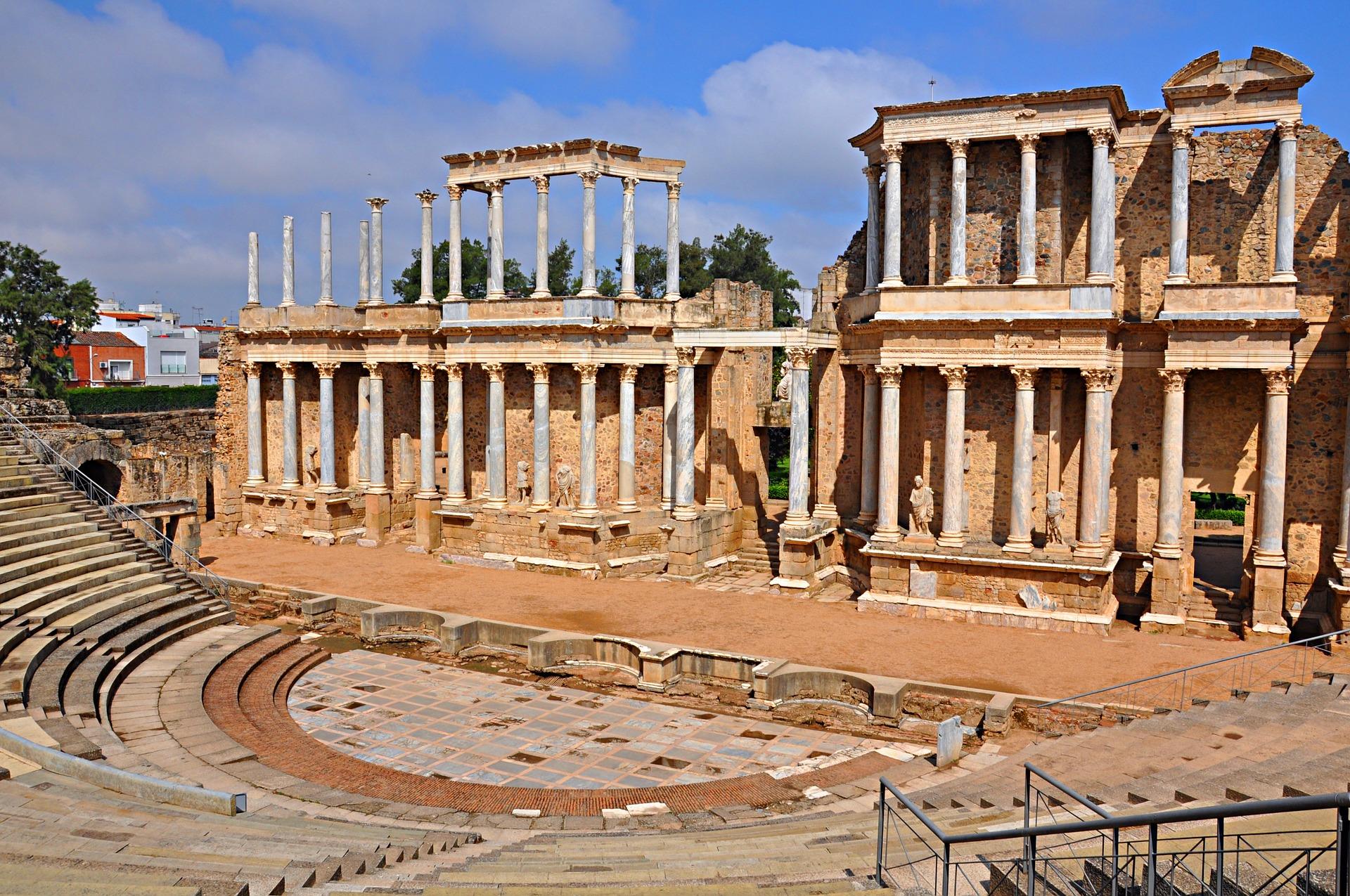
Spain was populated by Neanderthals during the Lower Paleolithic era but it wasn’t until the 2nd millennium BCE that it was populated by Phoenicians and Greeks. During this time, Celts populated the north of Spain.There are still a lot of Roman ruins in Spain like the Roman amphitheatre in Mérida, Extremadura. (Source: Luisfpizarro) Let’s jump forward to the 3rd century BCE when the Carthaginians, weakened by the Punic War against Rome, started to expand their territories. Thus, Hamilcar Barca founded Barcelona. He was defeated by the Romans but his son Hannibal took the helm and took back Saguntum in 219 BCE, starting the Second Punic War. Rome would win this war and the subsequent spoils. Rome founded the city of Italica in Spain in 206 BCE. Spain, which was called Hispania at the time, was completely Roman apart from a number of indigenous peoples. In 77 BCE Pompey was put in charge before Caesar Augustus was named governor. It wasn’t until 19 BCE that Spain was integrated and became one of the provinces of Rome. This large territory was administered without too many problems and Hispania was studied and mapped by historians. By the 5th century, the Roman Empire was under thread from the Goths. The Visigoths were the first to penetrate Spain in 415. These populations were regularly in conflict with Rome. In 475, the Visigoth Euric received Spain and part of Gaul from Romans wishing for peace. This, along with the fall of Ravenna in 476 would lead to the fall of the Roman Empire. Thus, by the end of the Antiquity, Spain was under Visigoth rule. The Barbarians had gained control of the Iberian territory. Find out more in our quick guide to Spain.
The Medieval Period between Muslims and Christians
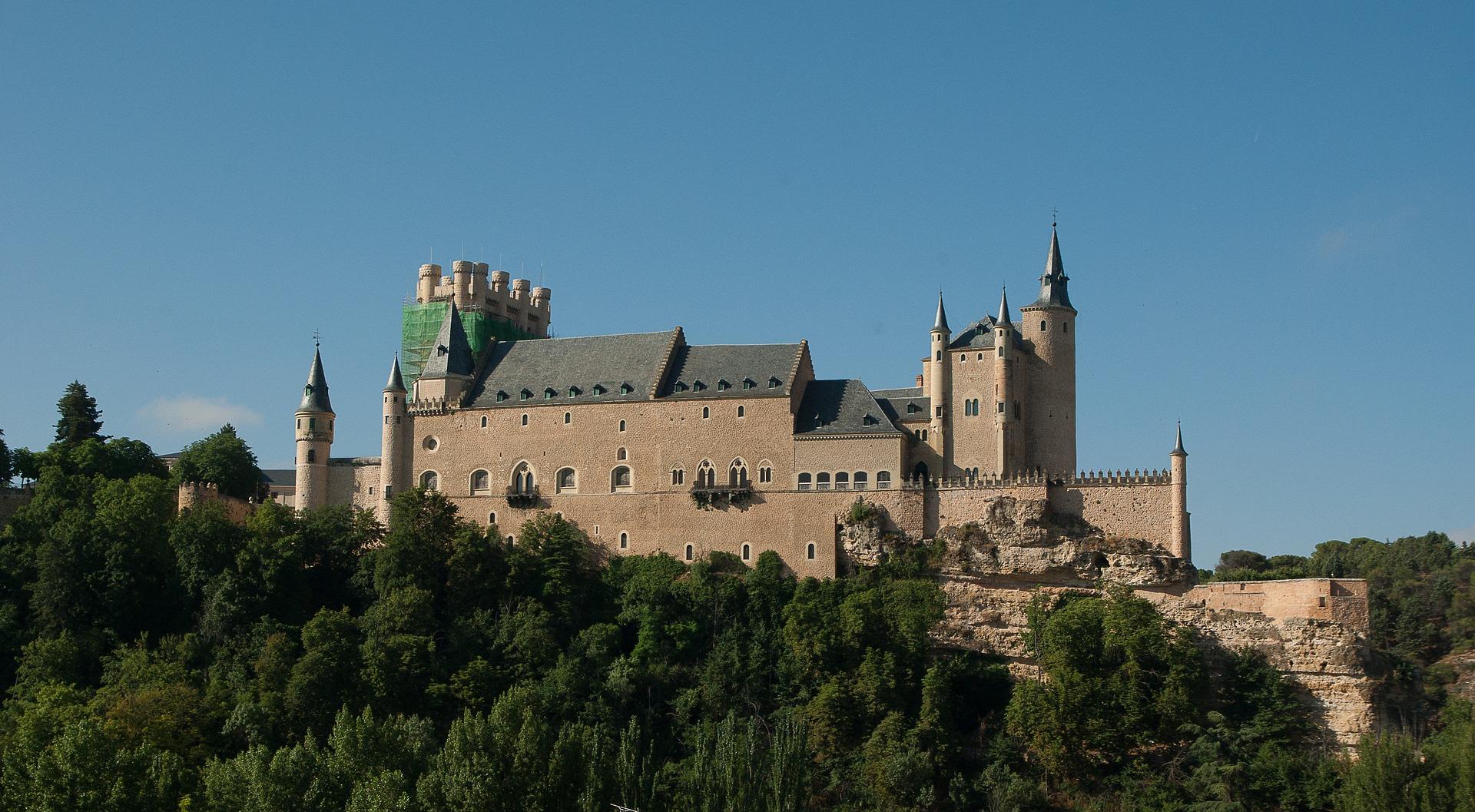
In 477, the Visigoths became the masters of Spain. While their approach was based on war, they did provide a certain level of security during the time they occupied Spain.Medieval Spain, like elsewhere in Europe, was constantly a battlefield which led to the construction of many castles. (Source: jackmac34) At the start of the 6th century, the Visigoths were driven from Southern Gaul by Clovis and were solely concentrated in Spain. They ceded the South of Spain to the Byzantine Empire in 554. The Goths were followers of Arianism. The main difference between Arianism and Christianity is that the Arians believe that Jesus was a human that possessed some divinity, a demigod of sorts. In 587, the Visigoth king Reccared I abandoned Arianism and converted to Christianity. 654 was an important year for the Visigoths as they published the Liber Ludiciorum, or the Visigothic Code, the first set of laws in the Visigoth Kingdom. The end of the Visigoth Empire came in 711 after a defeat to the Saracens. This is when there was a time of independent Spanish kingdoms, a time that would last until 1474. The Arab conquest was stopped in Poitiers in 732 by Charles Martel. They decided to settle in Spain. One of the first Muslim kingdoms was created in Cordoba in 756 and ruled by Abd Al-Rahman I. The Kingdom of Pamplona, which was occupied in 476 by Visigoths, was occupied by Moors in the 8th century until 778 when they were driven out by Charlemagne. The Reconquista was launched in Spain by Alfonso III (conquering Porto in 868 and Coimbra in 878) and carried on by his descendants such as the Count of Castile Diego Rodríguez Porcelos. However, Arab victories led to the creation of a caliphate in Cordoba led by Abd Al-Rahman III. Salamanca was retaken by the Arabs in 941 and they even ransacked Barcelona in 985 and Santiago de la Compostela in 997. In fact, the latter was destroyed in 1022 by Al-Mansur. In 1031, Ferdinand I of Leon and Castile annexed Leon and in 1055, they started the Reconquista of Muslim kingdoms. In 1072, Alphonse VI was the king of Leon and Castile. He later became the king of Toledo and Galicia through conquest and heritage. Thus, the Spanish kingdom was slowly reuniting. Alphonse VI counted on El Cid, Rodrigo Díaz de Vivar, as Prince of Valencia from 1094 for five years. The city was retaken in 1102 by Almoravids who reunified Muslim Spain in 1103. Of the 12th-century Muslim victories, the most notable include Ucles (1108), Zaragoza (1111), and Barcelona (1114). From 1118 onwards, the Christians started taking back territory. In 1128, Portugal gained its independence but it wouldn’t be until 1139 that it’d get its first king, Alphonse I. The Muslim and Christian kingdoms battled regularly during the 13th century. Here are some of the major victories for Castile and Aragon.
1229: Majorca
1235: Ibiza
1236: Cordoba
1238: Valencia
1246: Jaen
1248: Seville
1265: Murcia
1282: Sicily
The Medieval Era in Spain ended with a complete victory for the Catholics with their heads of state being Isabella I of Castile and Ferdinand of Aragon, major figures in Spanish history. You can also improve your Spanish by watching the best Spanish series.
Modern Spanish History: Colonialism and Decadence
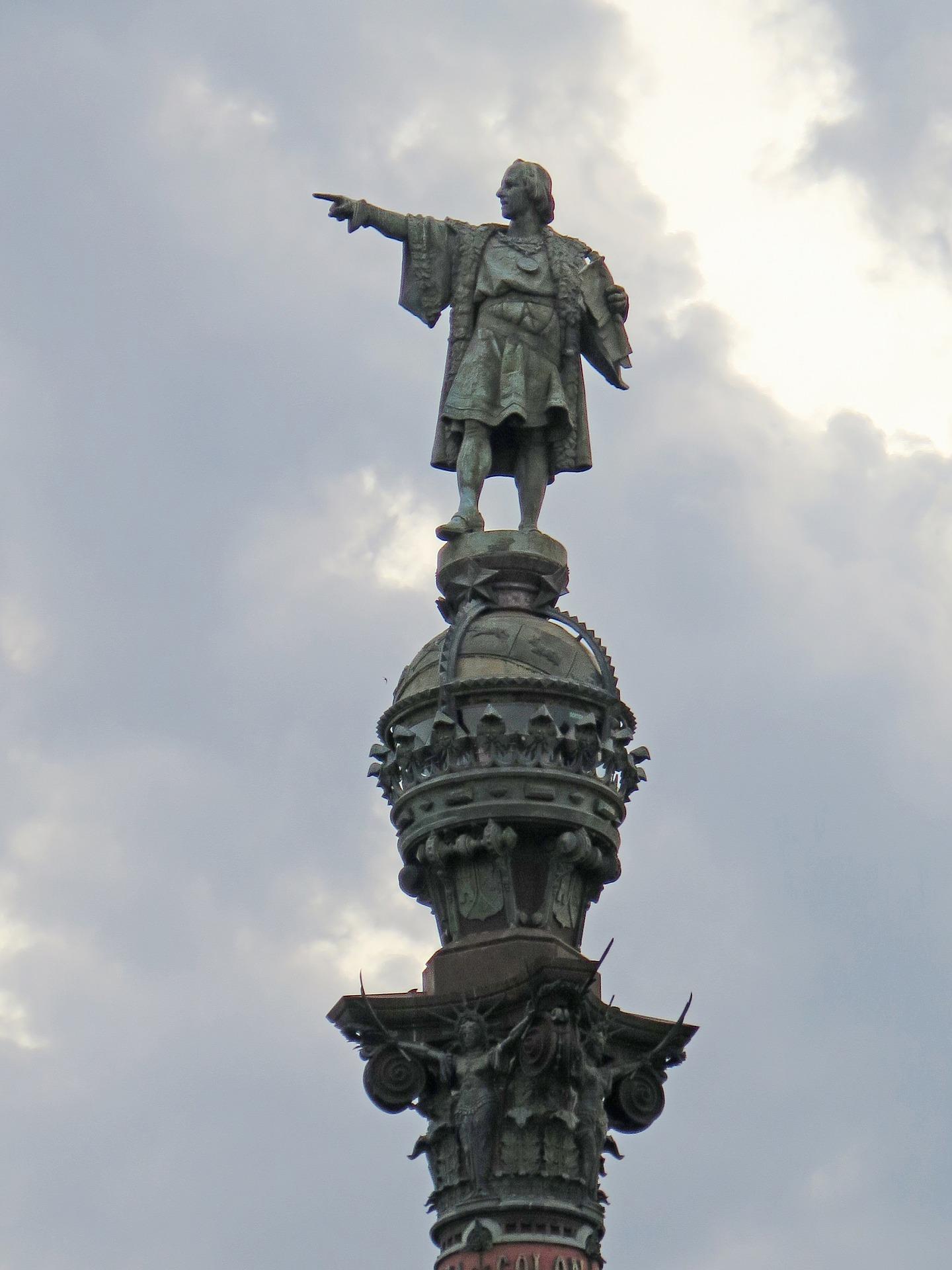
1492 wasn’t just the year where the Reconquista ended. This is also the year in which the sovereigns of Castile and Aragon financed Christopher Columbus’ expedition. He’d land on the island of Hispaniola at the end of the year.While public opinion of Christopher Columbus is shifting, he remains an important part of Spanish history. (Source: eminens) The Spanish empire also continued to expand, starting a golden age for the Spanish. In 1494, Spain and Portugal signed the Treaty of Tordesillas, splitting the new world in two. The same year, Isabella of Castile and Ferdinand of Aragon were given the titles of Catholic Queen and King respectively by Pope Alexander Vi. Isabella died in 1504 after a long and fruitful reign. She left behind her Joanna of Castile, also known as Joanna the Mad, who was incapable of leading. Ferdinand took control of the kingdom. When he died in 1516, it was Charles I of the Habsburgs. In 1519, as Cortes was landing in Chalchiuhcuecan in Mexico, the Emperor of the Holy Roman Empire died, leaving Charles I (of Spain) to become Charles V of the Holy Roman Empire. The next year, the Spanish left the Aztec Capital Tenochtitlan, following a revolt from the natives. The Spanish spoke of the Aztecs with quite some disgust. If they couldn’t educate them, they would have to force them. In 1521, Tenochtitlan was taken by Cortes. Cortes returned to Spain a hero having pillaged and massacred local populations. The reign of Charles V included a number of important events:
His rivalry with Francis I of France.
His conflicts and alliances with Henry VIII.
His marriage to Isabella of Portugal, giving him sovereignty over the territory.
The loss of lands to the Antipope Clement VII during the Western Schism.
The conquest of the Incan capital, Cuzco, by Pizarro.
The revolution in the Netherlands, which was quelled by the Spanish and Pragmatic Sanction.
His retirement towards the end of his life, leaving Phillip II in charge.
It wasn’t until 1561 that Madrid became the capital of Spain. The modern era was marred by several conflicts with France, Spain, the Dutch Republic, and the Ottoman Empire. The Unsinkable Armada was also sunk in 1589 by the English! The 17th century was a period of decline for Spain after the death of Phillip II even though the arts (including Cervante’s Don Quixote) continued to thrive. In terms of economy, diplomacy, and politics, Spain was weakened. It wouldn’t be until the end of the War of the Spanish Succession (1701-1713) that Spain found its feet with Phillip V. However, Spanish sovereigns could no longer claim crowns to other countries. The 18th century included economic growth and international trade. Find out more about other famous Spaniards.
Contemporary Spanish History: From Franco to Democracy
This era started with a counterrevolutionary war between Spain and France. However, the Spanish were quickly overrun by Napoleon who occupied the peninsula from 1808 to 1814. Improve yourself with a Spanish lessons here on Superprof. Modern Spain as a democracy has only existed for less than half a century! (Source: papagnoc) The 19th century was rife with political instability in Spain and regular coups d’état. The first republic was unsuccessful, lasting just two years between 1873 and 1875. The result was a parliamentary democracy which lasted until 1923 when Primo de Rivera led a coup d’état. This was also the same year that General Franco was named commander of the Spanish foreign legion. Primo de Rivera’s dictatorship lasted between 1923 to 1930. Censorship, institutions under the control of the army, and the suppression of parliament: all authoritarian tactics that inspired Mussolini’s regime. Primo de Rivera wanted to restore Spanish society, boost the country’s economy, and install a strong sense of nationalism. However, his dictatorship was considered too soft and the populace tired of it. The 1929 economic recession was the final nail in the coffin for the regime. Primo de Rivera stepped down in 1930 and died a few weeks later in exile. A fragile 2nd Republic was put in place in 1931 and it seemed full of promise following several important social reforms. However, political and ideological division and a disastrous economy led to violence in 1936. In 1936, Franco led a group of nationalists. On 1st October, Franco declared himself “Caudillo” and began in a civil war against “Red Spain”. In 1937, he unified the nationalist political parties under his banner. Thanks to nationalist and Christian propaganda as well as the support of Nazi Germany and Fascist Italy, Franco won the war in 1939 and became the leader of Spain:
“Generalísimo Francisco Franco, Caudillo de España por la Gracia de Dios”
His regime lasted for 36 years. It was an authoritarian autocracy which was paradoxically quite open to the rest of the world. His goals included economic modernisation, a common tactic of modern dictators. In 1975, Franco died, allowing the Spanish royal heir, Juan Carlos, to retake the throne. In collaboration with his prime minister, Adolfo Suárez, he led a transition towards democracy between 1976 and 1982. The democratic Spain we know today is actually very young! You should now know more about the history of this great country and the events that took place on its soil. To learn more about the subject, consider learning Spanish with a Spanish tutor and checking out our other articles on Spain, learning Spanish, listening to Spanish music, and getting ready to travel to Spain.
Mastering the Differences and Usage of Para vs Por If you've ever studied Spanish, you've almost certainly stumbled over por and para. Both can translate as "for" in English, yet they are used in very different situations; and mixing them up can change the meaning of a sentence entirely. Understanding the difference between por and […]
Essential Spanish Greetings and Goodbyes Learning basic greetings in Spanish is a great way to start your journey into the beautiful world of the Spanish language. Whether you're planning a trip to a Spanish-speaking country or just want to connect with Spanish speakers, mastering these essential greetings and goodbyes will help you communicate more effectively. […]
Learning Catalan: The Mini-Guide to Catalan Language and Culture “He who knows no foreign languages knows nothing of his own.” - Johann Wolfgang von Goethe The status of the Catalan language is an interesting one; it’s the mother tongue of around 10 million people but there is no single state that considers it its primary […]
How to improve your Spanish speaking fluency Mastering the speaking element of a language is always the trickiest. Unlike more passive skills like reading comprehension and to some extent listening, speaking requires you to think on your feet and express yourself in the moment. To improve your fluency in speaking you can’t just rely on […]
The Guide to Studying in a Spanish-speaking Country “To travel is to discover that everyone is wrong about other countries.” - Aldous Huxley According to the European Commission, 27% of Erasmus students met their current partner during their time abroad. Do you think you’ll find the one in Spain? Only time will tell. Before we […]
Everything You Need to Know Before Staying in Spain “The impulse to travel is one of the hopeful symptoms of life. ” - Agnes Repplier In 2017, Spain was the second most visited country in the world after France. From the Sierra Nevada to the beautiful beaches of the Mediterranean, from UNESCO World Heritage Sites […]
Essentials for Spanish Learning Learning Spanish grammar is a difficult task that even some native speakers find hard to master. But it’s not impossible, and by taking language classes you can crack the secret to fluent Spanish! Here are the essentials you need to know about Spanish grammar. Pronunciation of the Spanish Alphabet As a […]
Conjugating Verbs in Spanish To learn Spanish conjugation, you have to be rigorous and meticulous: for starters you have to learn the endings of all the verbs in each tense and learn all of the irregular verbs which don’t follow the normal rules. Here are our tips for mastering the tenses and moods of the […]
What Are The Best Ways To Learn Spanish? Why learn Spanish? Well, by deciding to learn Spanish, you are starting on the path to being able to communicate with around 560 million Spanish speakers. It’s the fourth most spoken language in the world, and the second most spoken first language in the world, second only […]





 Loading...